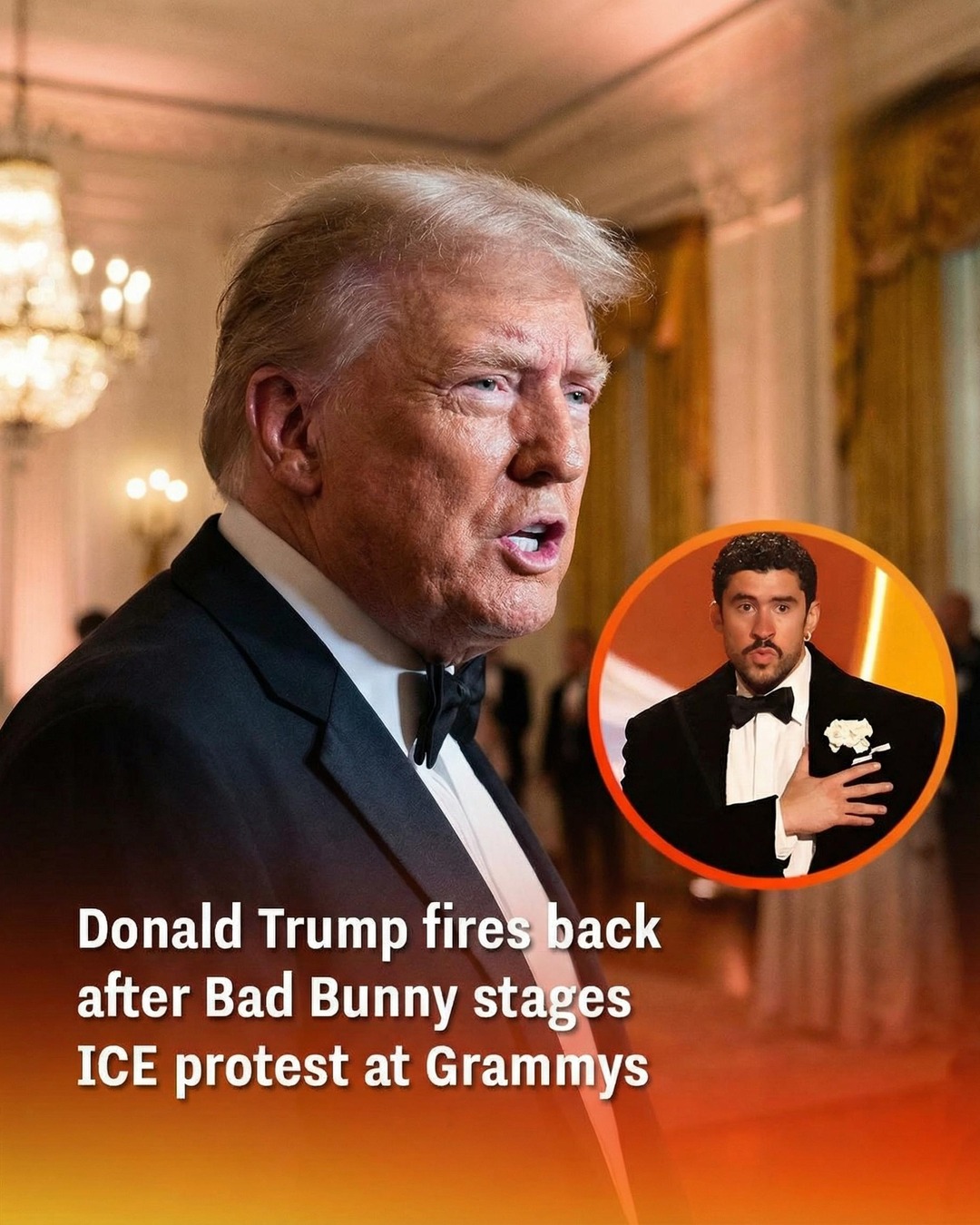
The recent Grammy Awards ceremony in Los Angeles was not only a celebration of musical achievements but also a moment where broader social topics entered the spotlight. Artists from a wide range of backgrounds gathered to honor excellence in music, and several acceptance speeches touched on themes of unity, compassion, and community concerns.
One of the most talked-about moments of the evening came from Puerto Rican artist Bad Bunny, who made history with a major win. During his speech, he encouraged audiences to reflect on empathy and understanding, emphasizing the importance of coming together despite differences. His remarks were met with applause inside the venue and quickly sparked conversations across social media platforms.
Following the event, reactions extended beyond the entertainment world. Former President Donald Trump responded publicly, expressing frustration over what he described as an increasing presence of political commentary during high-profile entertainment events. He also addressed jokes made by the show’s host, Trevor Noah, which referenced public figures during the broadcast. Trump disputed claims implied in the remarks and stated that he was considering legal options, saying he believed the comments were inaccurate. His response drew additional media attention and fueled discussion about the role of satire and commentary in award shows.
At the same time, public interest has shifted toward the upcoming Super Bowl, where Bad Bunny is scheduled to appear during the halftime show. Reports surrounding event preparations have included discussions about security measures, including the involvement of immigration enforcement personnel. Government officials noted that such measures are standard for large-scale events and are intended to ensure public safety. While some have supported these precautions, others have raised questions about how they may affect the overall atmosphere.
As major cultural and sporting events continue to attract massive audiences, they are increasingly becoming spaces where social conversations take place. Supporters of artistic expression argue that performers have long used their platforms to share personal values, while others feel entertainment should remain separate from political topics. Regardless of viewpoint, recent events show how music and sports often intersect with larger national discussions, extending their impact far beyond the stage.