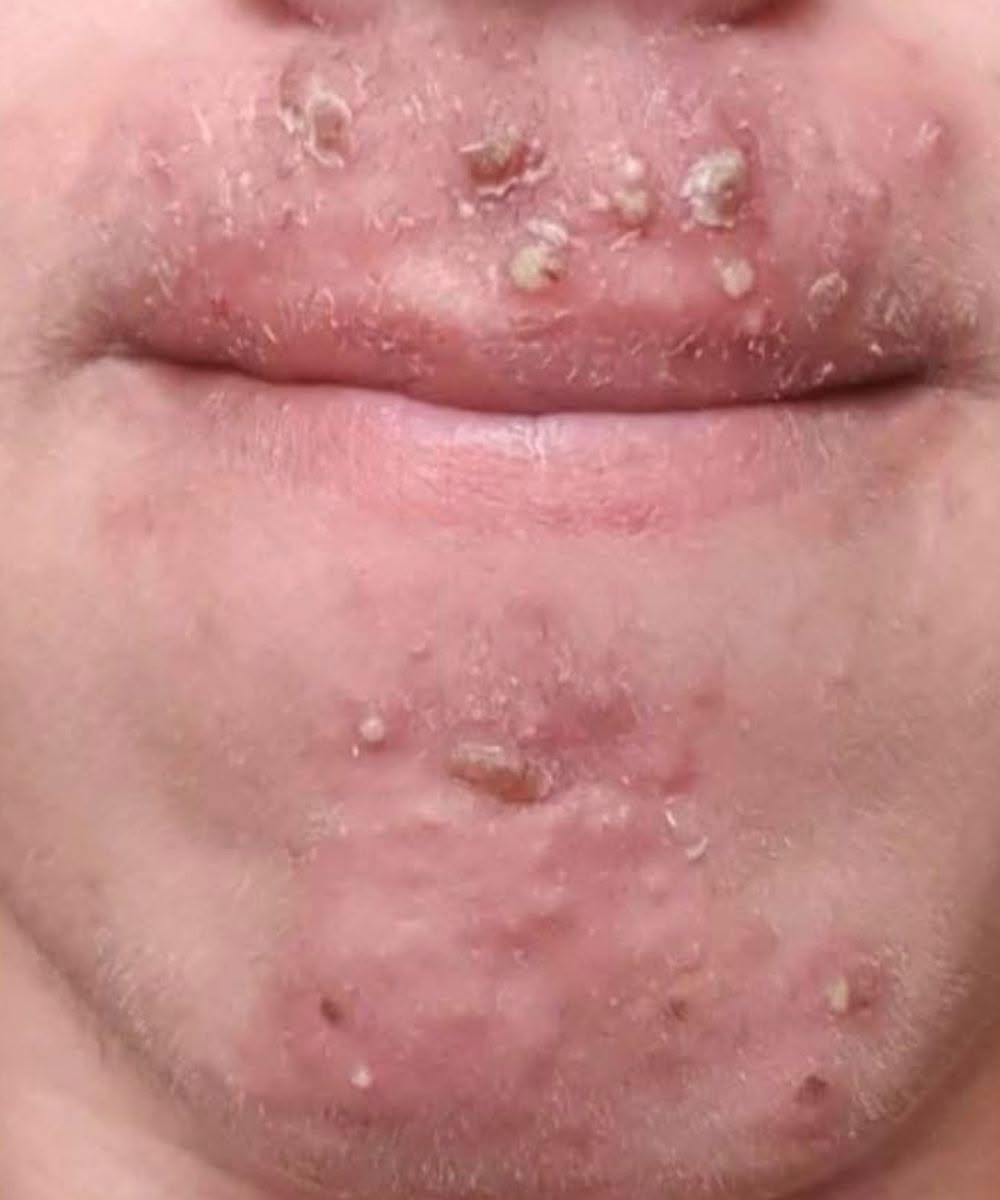
Skin irritation around the mouth can sometimes appear suddenly and cause concern, especially when symptoms include redness, dryness, flaking, or crusting. While these changes may look alarming, many different skin conditions can produce similar symptoms, making professional evaluation important.
Photographs alone cannot provide a reliable diagnosis. A healthcare professional can evaluate the skin directly and determine the underlying cause.
Common Symptoms
Skin problems affecting the area around the lips, mouth, and chin may include redness, dry or flaky skin, small bumps or rashes, crusting or scaling, mild itching or burning sensations, and increased sensitivity. These symptoms may develop gradually or appear over a short period of time.
Possible Causes of Skin Irritation
Several conditions can affect the skin around the mouth.
Irritated or Damaged Skin Barrier
The skin barrier helps protect against environmental irritants and moisture loss. Frequent exposure to harsh skincare products, friction, weather changes, or allergens may weaken this barrier and lead to redness and discomfort.
Perioral Dermatitis
Perioral dermatitis is a common skin condition that causes small bumps and redness around the mouth. The affected skin may feel dry, irritated, or slightly itchy. Although it can resemble acne, it requires a different approach to treatment.
Contact Dermatitis
Contact dermatitis occurs when the skin reacts to certain substances. Potential triggers may include toothpaste ingredients, cosmetic products, facial cleansers, shaving products, fragrances, and certain skincare ingredients. Avoiding the triggering product often helps improve symptoms.
Eczema
Eczema, also known as atopic dermatitis, can cause dry, itchy, and inflamed skin. The area around the mouth may become irritated, particularly during periods of increased sensitivity or environmental changes.
Bacterial Skin Infections
Some bacterial infections can cause redness, sores, and crusting around the mouth. Medical evaluation may be necessary to determine whether treatment is required.
Cold Sores
Cold sores caused by the herpes simplex virus may appear around the lips and can sometimes be confused with other skin conditions.
Avoid Scratching or Picking the Skin
When skin becomes irritated, scratching, rubbing, or picking at the affected area may worsen symptoms. These habits can delay healing, increase irritation, damage the skin barrier, raise the risk of infection, and potentially lead to scarring.
Harsh scrubs, strong acne products, and alcohol-based skincare products may also increase discomfort.
Gentle Skin Care Tips
Simple habits may help support the skin’s natural healing process. Washing the area with a gentle cleanser, using lukewarm water, patting the skin dry with a clean towel, avoiding heavily fragranced products, keeping pillowcases and towels clean, avoiding the sharing of personal items, and limiting unnecessary touching of the affected area may all help reduce irritation.
When to See a Healthcare Professional
Medical advice may be appropriate if the rash continues to spread, symptoms become painful, the skin feels warm or swollen, pus or significant crusting develops, fever or fatigue occurs, or symptoms do not improve over time.
A healthcare professional or dermatologist can determine the cause and recommend appropriate treatment if needed.
The Importance of Proper Diagnosis
Many skin conditions can look very similar. Redness, bumps, dryness, and crusting may result from irritation, allergies, inflammation, infections, or other skin disorders.
Because treatment depends on the underlying cause, professional evaluation is often the most effective way to identify the condition and develop a suitable care plan.
Early attention may help reduce discomfort, support healing, and prevent potential complications.
Final Thoughts
Skin irritation around the mouth is common and may have many possible causes. While mild cases sometimes improve with gentle skincare and avoiding irritants, persistent or worsening symptoms should be evaluated by a healthcare professional.
Understanding the cause is the first step toward effective treatment and long-term skin health.