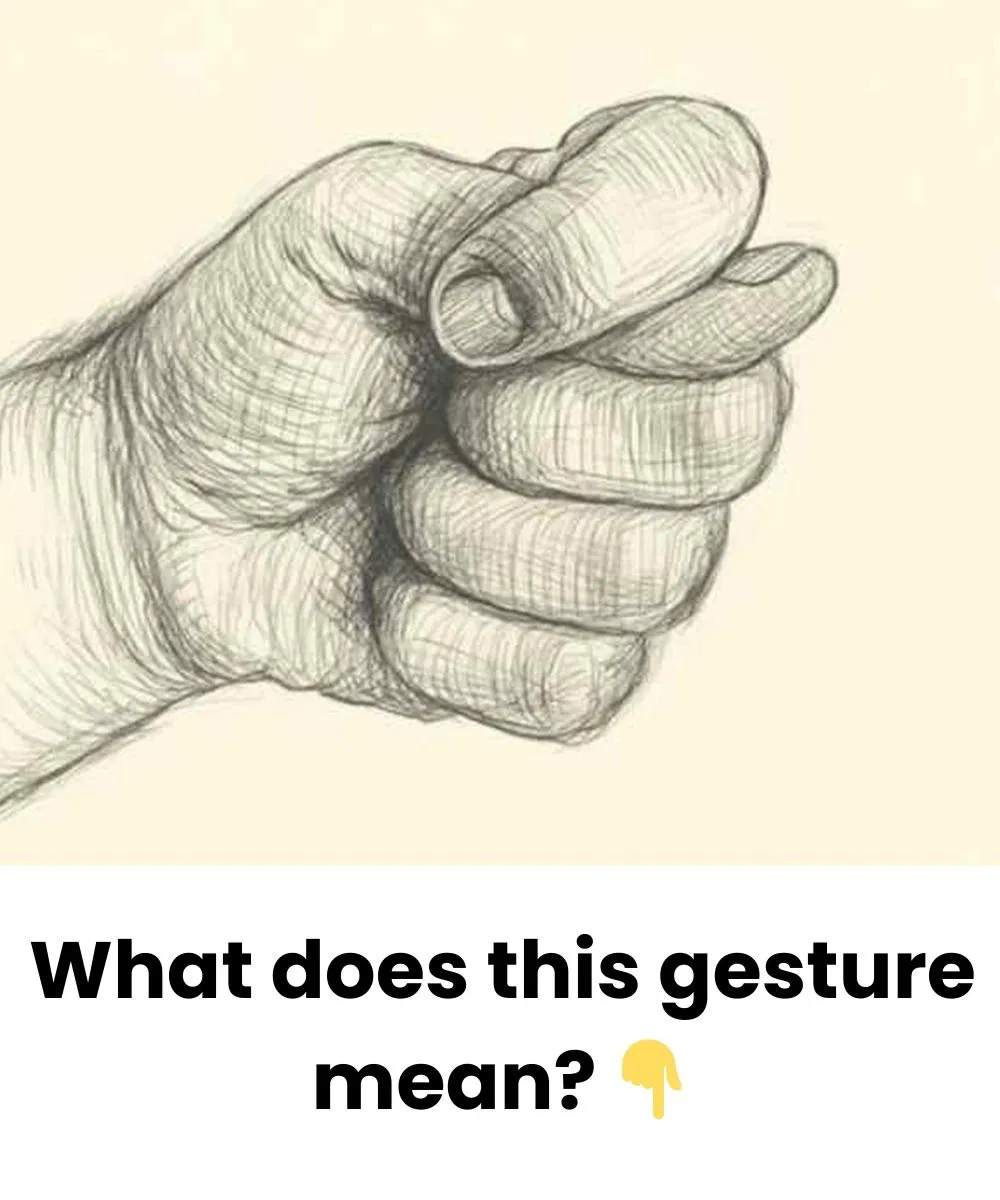
What Does This Unique Hand Gesture Really Mean?
At first glance, it might seem like an ordinary closed fist. But look closely: the thumb is tucked between the fingers. This small detail transforms the gesture into something far more meaningful than a simple clenched hand. Known historically as "making a fig," this symbolic action has been a powerful form of nonverbal expression for centuries. It carries a story, conveys messages without words, and has even been linked to protection and good luck.
Hand gestures are among humanity's oldest forms of communication, older than most written languages. A single position of the fingers can mean welcome in one country and insult in another. The fig gesture is one of the most fascinating examples, because its meaning has shifted dramatically across time and place.
A Silent "No": When Gestures Speak Louder Than Words
Picture yourself in a small European village in the 19th century. Officials knock on the door, and instead of responding with raised voices, someone discreetly holds up a fig gesture from the window. Without uttering a single word, this simple sign communicates a firm refusal: "You won't get anything" or "You can always dream."
In traditional French culture, it became a polite yet unmistakable way of saying "no" without confrontation. Rather than arguing or raising one's voice, a person could make the gesture and end the discussion. It was defiance made elegant, refusal without rudeness.
This use of gesture as silent resistance has deep appeal. Words can be overheard, quoted, and used against you. A gesture is deniable, instant, and universally understood by those who know the code. For people living under authority they could not openly challenge, such silent signals were invaluable.
Ancient Origins and Symbolic Power
The fig gesture is not a modern invention. Its roots stretch back to antiquity, where it carried layers of meaning that went far beyond simple refusal.
In ancient Russia and parts of Eastern Europe, people believed it had protective qualities. It was often used to ward off the "evil eye" or negative energies. The closed fist symbolized hidden strength, while the tucked thumb acted as a miniature talisman. Over time, it became both a cultural sign of defiance and a charm believed to bring safety.
The gesture's name, "the fig," comes from the resemblance of the tucked thumb to a fig fruit, which itself carried symbolic associations with fertility and abundance in ancient Mediterranean cultures. What looks like a crude shape to modern eyes was once a meaningful emblem.
Some historians trace protective hand gestures even further back, to ancient amulets shaped like fists that were worn for good luck. The human hand, it seems, has always been seen as a source of power, capable of both blessing and cursing depending on how it is held.
From Playgrounds to Private Jokes
In modern times, the fig gesture has taken on a lighter role in many places. Children around the world know a version of it as a playground trick: "I've got your nose!" An adult tucks their thumb between their fingers, pretends to pluck a child's nose, and shows the "captured" nose wiggling between the knuckles.
This playful use has kept the gesture alive in cultures where its older, more serious meanings have faded. Most parents performing the trick have no idea they are using a sign that once warded off evil spirits or delivered silent insults. The gesture survived by becoming a game.
In some countries, the fig remains a vulgar insult, roughly equivalent to an obscene gesture. Travelers are often surprised to learn that an innocent hand position from home can cause genuine offense abroad. This is why understanding gesture meanings matters: context is everything.
The Gesture Map: How Meanings Change by Region
The fig gesture's meaning varies remarkably around the world:
- France and parts of Western Europe: Traditionally a dismissive "no" or "you get nothing," now largely archaic.
- Russia and Eastern Europe: Historically protective against the evil eye; also used as a rude refusal, similar to "dream on."
- Brazil and Portugal: Known as the "figa," it is a widely recognized good luck charm, often worn as jewelry. Here the meaning is entirely positive.
- Turkey and parts of the Middle East: Can be an obscene insult, so visitors should avoid it.
- Japan: The gesture can have a sexual connotation and is considered crude.
- United States and UK: Mostly known through the children's "got your nose" game, with little awareness of other meanings.
This dramatic range, from lucky charm to vulgar insult, makes the fig one of the most culturally loaded gestures in existence. The same hand shape that a Brazilian grandmother wears as a protective pendant could start a confrontation in Istanbul.
Why Gestures Carry Such Power
Human beings process body language faster than speech. A gesture bypasses the slow work of translating words and hits the emotional brain directly. That is why a raised middle finger provokes instant anger while a long insult might merely annoy.
Gestures also carry the weight of history. When you make the fig, you are participating in a tradition thousands of years old, whether you know it or not. The hand remembers what the mind has forgotten.
Anthropologists note that gestures often survive even when their original meanings die out. They persist in children's games, in jewelry, in superstition, long after anyone remembers why. The fig is a perfect example: a protective talisman that became an insult that became a joke, all without changing shape.
Reading Hands in a Global World
In an era of international travel and video calls, gesture literacy is more useful than ever. A few guidelines help avoid misunderstandings:
- When in doubt, keep hands still: Neutral body language is safe everywhere.
- Learn local meanings: Before traveling, check whether common gestures from home have different meanings abroad.
- Watch reactions: If a gesture gets an unexpected response, apologize and ask. Most people understand honest mistakes.
- Appreciate the history: Even gestures that seem silly often have fascinating backstories worth knowing.
Frequently Asked Questions
What is the fig gesture?
It is a hand gesture made by tucking the thumb between the index and middle fingers of a closed fist. Historically known as "making a fig," it has meant everything from a protective charm to a rude insult depending on the culture.
Why is it called "the fig"?
The tucked thumb was thought to resemble a fig fruit. In ancient Mediterranean cultures, the fig symbolized fertility and abundance, giving the gesture layered symbolic meaning.
Is the fig gesture offensive?
It depends entirely on where you are. In Brazil and Portugal, it is a good luck symbol. In Turkey, Japan, and parts of the Middle East, it can be vulgar or insulting. In the US and UK, it is mostly known as a children's game gesture.
What does the "got your nose" trick have to do with it?
The children's game uses the exact hand position of the fig gesture. The "captured nose" wiggling between the fingers is the tucked thumb. Most people playing the game have no idea of the gesture's ancient history.
Did people really use it to ward off the evil eye?
Yes, in Russia and Eastern Europe the gesture was traditionally believed to offer protection against the evil eye and negative energies. Small fig shaped amulets were also worn as protective charms.
A closed fist with a tucked thumb looks simple, but it contains centuries of human history: protection, defiance, humor, and luck, all folded into a single position of the hand. The next time you see it, whether in a playground game or a piece of jewelry, you will know you are looking at one of humanity's oldest and most traveled symbols.