
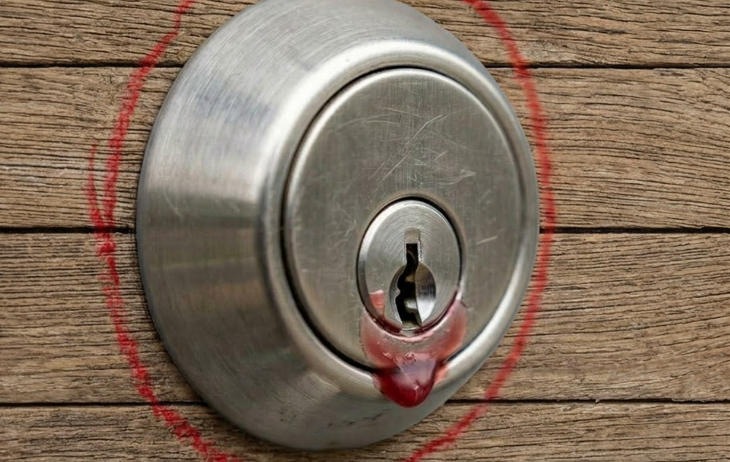
What It Could Mean If You Notice Wax Inside Your Door's Keyhole
A Small Detail Worth Noticing
Home security is something many people think about more carefully when they notice something unusual. A small change near your front door, like a mark around the lock or an unfamiliar substance, may seem minor at first. However, even subtle details can sometimes be worth a closer look.
Security professionals often note that individuals assessing homes may rely on quiet, low-visibility methods. These approaches are not always obvious and can be easy to overlook during a busy day. That is why staying aware of small changes around your entry points can be helpful in maintaining peace of mind.
In one widely discussed example, a homeowner noticed a small amount of red wax inside her door's keyhole. Initially, she assumed it might have come from something she owned, such as an item attached to her keychain. After checking, she could not find a clear explanation for how it got there. Curious and slightly concerned, she shared her experience online, and the responses opened up a fascinating discussion about home security awareness.
Harmless Explanations First
Responses varied. Some people suggested harmless causes, like a child playing nearby or accidental contact with wax or crayon. These explanations can often account for unexpected findings and may provide reassurance. Before assuming the worst, it is worth considering the innocent possibilities:
- Children playing: Kids put wax, crayons, and small objects into keyholes out of curiosity. If children visit or live nearby, this is a common explanation.
- Keychain transfer: Wax seals, decorative keychains, or candles carried near keys can leave residue.
- Accidental contact: Carrying candles, wax melts, or craft supplies past the door can result in incidental transfer.
- Previous occupants: In rentals or recently purchased homes, residue may predate your occupancy.
- Maintenance work: Locksmiths, painters, or handymen sometimes leave traces of materials used during work.
- Weather and debris: In some cases, what looks like wax may be hardened sap, sealant, or other environmental residue.
In the vast majority of cases, unusual substances around a lock have mundane explanations. Starting with these possibilities prevents unnecessary anxiety while still keeping you observant.
Why Some People Find It Concerning
Others mentioned that, in some cases, materials placed in or around a lock could be used to observe activity. For example, if the material is disturbed or removed, it might indicate that someone has used the keyhole or tampered with the lock. This is sometimes discussed as a low-tech method for monitoring whether a door has been accessed.
It is important to approach such theories with balanced skepticism. While creative low-tech surveillance methods do exist in the world of security, from the classic "hair across the door" trick to more elaborate setups, there is no widely documented pattern of criminals specifically using wax in keyholes as a standard practice. Most professional security experts emphasize that determined intruders rely on far more direct methods.
That said, the underlying instinct, paying attention to changes around your entry points, is sound security practice regardless of the specific theory. Awareness itself is protective.
Practical Home Security Awareness
Whether or not the wax means anything sinister, the incident highlights good habits every homeowner and renter should practice:
Regular entry point checks:
- Inspect locks, doors, and windows periodically for signs of tampering, scratches, or unfamiliar substances
- Check that deadbolts and strike plates are secure and undamaged
- Look for new marks around door frames that were not there before
- Test that all locks engage smoothly; stiffness or resistance can indicate tampering or simply need maintenance
Know your baseline:
- Familiarize yourself with the normal appearance of your locks and doors
- Photograph entry points when you move in, creating a reference for comparison
- Note who has keys and when locks were last changed
Strengthen your entry points:
- Install deadbolts with at least a one-inch throw on all exterior doors
- Use reinforced strike plates with long screws anchored into the door frame stud
- Consider smart locks that log entry activity
- Ensure exterior doors are solid core, not hollow
- Install peepholes or video doorbells to see visitors safely
Maintain situational awareness:
- Notice unfamiliar vehicles or individuals lingering near your home
- Vary your routines when possible
- Get to know your neighbors; communities that communicate are harder targets
- Report genuinely suspicious activity to local law enforcement
What to Do If You Find Something Suspicious
If you discover wax or any unfamiliar substance in your keyhole and cannot explain it:
- Document it. Take clear photos before touching or cleaning anything.
- Consider the context. Have you had visitors, workers, or children around? Did you recently move? Context often explains mysteries.
- Clean it carefully. If you decide to remove it, use appropriate methods that will not damage the lock. A locksmith can help if the substance affects lock function.
- Monitor for recurrence. A one-time finding with a plausible explanation is very different from repeated occurrences.
- Talk to neighbors. They may have noticed similar things or have relevant context about the area.
- Contact authorities if genuinely concerned. If you have multiple reasons for concern, not just the wax alone, local police can advise.
- Consider a lock change if you have any doubt about who may have accessed your home, especially after moving in or losing keys.
The Psychology of Home Security Anxiety
Finding something unexplained near your front door triggers a specific kind of unease. Home is supposed to be the place where you are safe and in control. Evidence that someone else may have interfered with that space, however ambiguous, violates that sense of security.
This anxiety is normal and worth acknowledging. A few principles help keep it proportionate:
- Most anomalies have innocent explanations. Start there.
- One data point is not a pattern. A single unusual finding deserves attention, not alarm.
- Action reduces anxiety. Taking reasonable security steps, checking locks, documenting findings, feels better than worrying passively.
- Avoid spiraling. Online discussions can amplify fears disproportionately. Balance internet theories with professional advice.
- Trust calibrated instincts. If something feels genuinely wrong beyond the single finding, honor that feeling by taking practical steps.
Building Genuine Peace of Mind
True home security comes not from obsessing over every anomaly but from building solid, layered defenses and good habits:
- Quality locks on every entry point, properly installed
- Good lighting around entrances, ideally motion-activated
- Trimmed landscaping that eliminates hiding spots near doors and windows
- Video doorbells or cameras that record activity
- Alarm systems appropriate to your situation and budget
- Neighbor relationships that create informal community watchfulness
- Regular maintenance of all security hardware
With these foundations in place, a bit of unexplained wax becomes what it most likely is: a curiosity, not a crisis. And on the off chance it signals something more, your layered defenses have you covered.
Frequently Asked Questions
What should I do if I find wax in my door's keyhole?
Document it with photos, consider innocent explanations first (children, keychain transfer, previous occupants, maintenance work), clean it carefully without damaging the lock, monitor for recurrence, and talk to neighbors for context. Contact authorities only if you have multiple reasons for genuine concern.
Is wax in a keyhole a known burglary technique?
There is no widely documented pattern of criminals using wax in keyholes as a standard practice. While theories exist about low-tech monitoring methods, most security professionals emphasize that such scenarios are uncommon and that awareness of entry points is good practice regardless.
What are common harmless causes of substances around locks?
Children playing with wax or crayons, transfer from keychains or candles, accidental contact while carrying items, residue from previous occupants or maintenance workers, and environmental debris like hardened sap or sealant.
How can I improve my front door security?
Install deadbolts with at least one-inch throws, use reinforced strike plates with long screws, ensure doors are solid core, add peepholes or video doorbells, maintain good exterior lighting, and consider smart locks that log activity.
When should I change my locks?
Change locks when moving into a new home, after losing keys, following a breakup or roommate departure, if you suspect unauthorized access, or if existing locks show signs of tampering or wear that affects their function.



