Have you ever wondered whether small everyday decisions might reflect something about your personality? From the way we interact with others to the choices we make in public spaces, our actions can sometimes offer insight into our values and priorities.
One popular thought experiment known as the Bus Seat Dilemma encourages people to reflect on how they respond to different situations involving kindness, empathy, and social awareness. While it is not a scientific personality test, it can be an interesting way to explore your natural instincts.
The Scenario
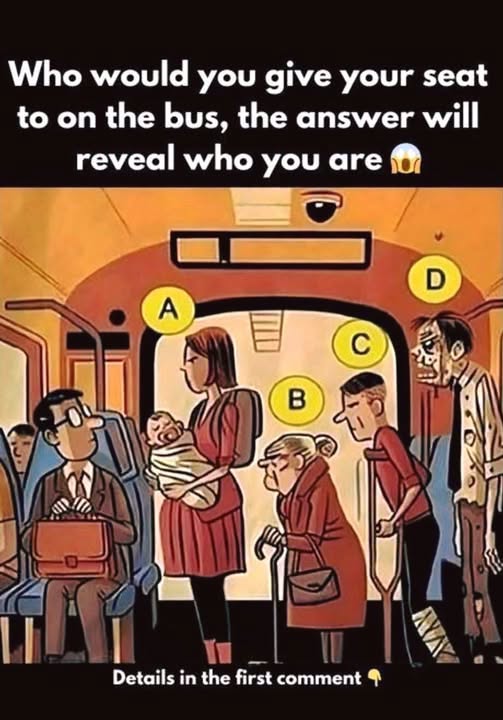
Imagine boarding a crowded bus after a long day. Every seat is occupied except for one. As you look around, you notice four people who could potentially benefit from that last available seat:
- A mother holding a baby
- An elderly woman
- A man using crutches
- A man who appears unwell
Who would you offer the seat to?
There is no right or wrong answer. Instead, each choice may reflect different priorities and ways of thinking.
Option 1: The Mother Holding a Baby
A parent caring for a young child often faces both physical and emotional demands. Seeing someone in this situation may inspire feelings of compassion and support.
People who would naturally choose the mother and baby may place a high value on caregiving, empathy, and helping those who appear vulnerable. They often enjoy creating a supportive environment for others and tend to be attentive to emotional needs.
Option 2: The Elderly Woman
Older adults are often viewed with respect because of their life experience and the challenges that can come with aging.
If you would offer the seat to the elderly woman, it may suggest that you value courtesy, respect, and consideration for social traditions. You may appreciate fairness, responsibility, and showing kindness through thoughtful actions.
Option 3: The Man Using Crutches
Limited mobility can make standing on a moving bus particularly difficult. This situation highlights immediate physical need.
Those who choose the man using crutches may focus on practical solutions and visible challenges. They often prefer taking action when they see someone who may benefit from assistance and are comfortable making quick decisions in everyday situations.
Option 4: The Man Who Appears Unwell
Someone who looks sick or uncomfortable may not have an obvious physical limitation, but their condition can still require attention and care.
Choosing this person may indicate sensitivity to signs of distress and concern for overall well-being. People who make this choice often pay close attention to circumstances and try to determine where help might be most urgently needed.
Why This Exercise Is Interesting
The Bus Seat Dilemma is less about finding a correct answer and more about understanding personal perspectives. Each option reflects a different way of evaluating a situation, whether through compassion, respect, practicality, or concern for health and comfort.
Our responses are often influenced by personal experiences, cultural values, and individual beliefs. Because of this, two people may view the same situation very differently while both acting with good intentions.
The Importance of Self-Reflection
Exercises like this can encourage greater self-awareness. They invite us to think about how we make decisions and what factors influence our choices.
It’s important to remember that personality cannot be defined by a single decision. Human behavior is shaped by many factors, including mood, environment, past experiences, and current circumstances.
The value of this thought experiment lies in the opportunity to reflect on how we respond to others and what matters most to us in moments that require quick judgment.
Final Thoughts
The Bus Seat Dilemma reminds us that even simple everyday choices can reveal interesting insights about our priorities and values. Whether you are guided by compassion, respect, practicality, or concern for someone in need, each response highlights a different aspect of human kindness.
While this exercise is meant purely for reflection and entertainment, it offers a thoughtful reminder that our small actions can have a meaningful impact on the people around us.