
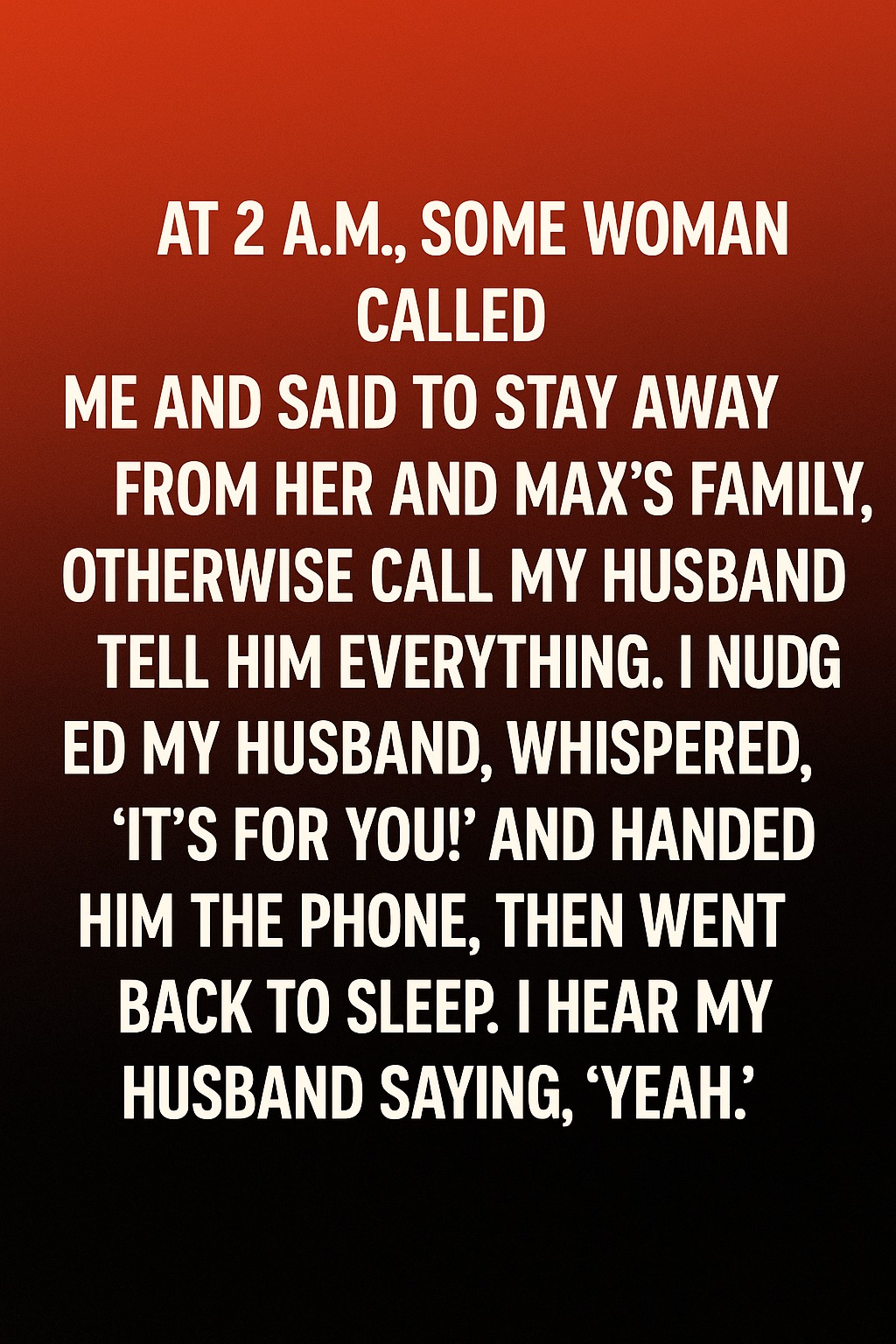
A 2 A.M. Call That Nearly Broke My Marriage Until the Truth Finally Came Out
It is 2 a.m. The phone buzzes. A stranger's voice says something alarming about your spouse, and suddenly your heart is pounding in the dark. In that moment, years of trust can feel like they are dissolving. Stories built on this premise resonate because they touch a universal fear: what if the person I trust most is not who I think they are?
This article is not a report on any verified incident. It is general guidance on a theme every long-term couple may face: handling sudden doubt, communicating about trust, and finding the truth without destroying the relationship in the process.
Why a Single Moment Can Shake Years of Trust
Trust is built slowly and can feel shattered instantly. A strange call, an unfamiliar name, a message that does not make sense: these fragments bypass logic and go straight to emotion. Psychologists call this the brain's threat response. At 2 a.m., exhausted and half-awake, you are at your most vulnerable to it.
What makes these moments so destabilizing is not just the content but the ambiguity. A calm "it was a mix-up" from your spouse can sound reassuring or suspicious depending entirely on your state of mind. The same sentence lands differently at noon and at midnight. Recognizing that your perception is compromised by fear and fatigue is the first step toward handling it well.
It also helps to know that doubt itself is not evidence. Feeling suspicious does not mean something is wrong, just as feeling secure does not guarantee everything is fine. Feelings are signals to investigate calmly, not verdicts.
Do Not Let Your Imagination Write the Ending
In the hours after a scare like this, the mind becomes a storyteller, and it rarely tells comforting stories. Every late work night gets reinterpreted. Every vague memory becomes a clue. This is normal, but it is also dangerous, because once a narrative takes hold, confirmation bias does the rest: you start noticing only the things that fit the suspicion.
Practical ways to interrupt the spiral:
- Name what you actually know. Write down the facts, separately from your interpretations. "A woman called at 2 a.m. and mentioned Max" is a fact. "My husband is having an affair" is an interpretation.
- Delay conclusions. Give yourself 48 hours before deciding what anything means. Urgent feelings do not require urgent actions.
- Avoid midnight investigations. Going through a partner's phone at 3 a.m. feels productive but usually produces more anxiety, not clarity, and it damages trust in both directions.
- Talk to one grounded person. A calm friend can reflect your thinking back to you and spot when fear is driving.
How to Raise Concerns Without Starting a War
Eventually, you need to talk about it. How you raise the subject determines whether the conversation builds understanding or triggers defensiveness.
Choose a calm moment, not the middle of the night and not during an argument. Use "I" language: "I received a strange call and it frightened me" rather than "You need to explain yourself." Describe what happened factually, share how it made you feel, and ask for their perspective with genuine openness.
Then listen. Really listen. A partner with nothing to hide will usually be confused, concerned about your distress, and willing to help you check the facts. Defensiveness alone is not proof of guilt; being accused of something painful makes most people defensive. Look at the whole pattern: their willingness to be transparent, the consistency of their account, and their care for your feelings.
Verifying Facts Without Becoming a Detective
There is a line between healthy reassurance and destructive surveillance, and it matters enormously which side you stay on.
Healthy verification is open and mutual: "Can we look at the call log together?" or "Would you mind if I met Max at the office party?" It is done in daylight, with your partner's knowledge, and it stops once the question is answered.
Surveillance, secret phone checks, location tracking without consent, interrogating friends, corrodes the relationship even when it finds nothing. If you cannot resolve a doubt without spying, that itself is important information about the state of the trust, and it is worth discussing with a counselor rather than acting on alone.
In many of these stories, the truth turns out to be mundane: a wrong number, a confused caller, a coworker with a similar name. Boring explanations are far more common than dramatic ones. Keep that in mind before you burn down something good searching for a fire.
Rebuilding After a Scare
Even when the truth clears everything up, the emotional residue lingers. You may feel embarrassed about doubting, or your partner may feel hurt at being doubted. Both reactions deserve airtime.
Talk about what the episode revealed. Perhaps you need more transparency about work friendships. Perhaps you need reassurance during stressful periods. Perhaps you discovered that exhaustion makes you catastrophize, and you need better sleep boundaries. A scare handled well often leaves a couple more honest than before.
Some couples find it useful to establish small trust rituals afterward: a quick text when plans change, sharing calendars, or simply asking about each other's day with real attention. These are not monitoring. They are the ordinary maintenance that keeps doubt from finding cracks to grow in.
When to Seek Help
Consider couples counseling if:
- Doubt persists even after facts check out.
- The same suspicions keep resurfacing in different forms.
- Either partner has started hiding things, even small things, to avoid conflict.
- Communication about trust consistently turns into fights.
- There was a real breach in the past that was never fully repaired.
A good counselor is not a judge. They are a translator, helping two people who love each other hear what the other is actually saying beneath the fear.
Frequently Asked Questions
Is it normal to doubt my spouse after something like this?
Yes. Sudden, ambiguous threats trigger protective instincts. Doubt is a normal first reaction; what matters is what you do with it next.
Should I confront my partner immediately?
Not at 2 a.m. Wait until you are calm and rested, then raise it directly and honestly. Timing is part of respect.
What if my partner gets angry at being questioned?
Some anger is a normal response to being distrusted. Distinguish between hurt defensiveness, which usually softens into conversation, and aggressive deflection that shuts down all discussion. The pattern over time tells you more than one heated moment.
How do I stop obsessing over it?
Write down the facts, decide what would actually answer your question, pursue that openly, and then let the answer stand. Rumination feeds on unanswered questions; answered ones lose their power.
Can a marriage be stronger after a false alarm?
Often, yes. Couples who navigate a scare with honesty frequently report better communication afterward. The crisis becomes proof that they can face hard things together.
A frightening call in the night tests a marriage, but it does not have to break it. Handled with calm, honesty, and respect, even the scariest 2 a.m. moment can become just a story you tell later, about the night you learned how strong your trust really was.


