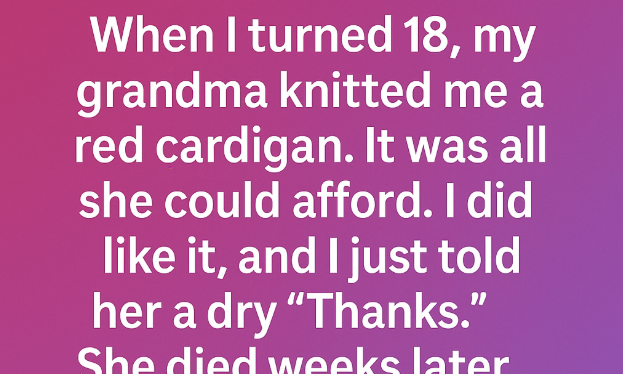
A Cherished Gift That Carried a Hidden Message of Love
Some gifts are just objects. Others carry weight far beyond their material: a grandmother's handmade cardigan, folded away for years, holding a secret note in its pocket that reaches across generations. Stories like this endure because they capture something everyone recognizes: love does not end when a person is gone. It hides in the things they made, waiting to be found.
This article explores that theme through storytelling and general guidance: why handmade gifts matter so much, how to honor the love inside them, and how to create your own legacy of meaningful giving.
The Gifts That Carry Love
A handmade gift is never just the thing itself. Every stitch of a knitted cardigan represents hours of someone's time, attention, and care. When a grandmother makes a cardigan for her granddaughter's 18th birthday, she is saying something that words alone cannot: I thought about you for weeks. I chose this color for you. I imagined you wearing it.
Young recipients do not always understand this. At 18, a handmade cardigan can feel old-fashioned next to the excitement of friends and celebrations. A quick "thanks" and a rush out the door is not ingratitude; it is youth. The understanding usually arrives later, often much later, when we have loved and lost enough to recognize what devotion looks like.
If you have ever dismissed a handmade gift and regretted it, you are in good company. The beautiful thing is that the love was in the gift all along, patiently waiting for you to be ready to see it.
Regret and the Things We Wish We Had Said
In this story, the grandmother passes away just weeks after giving the cardigan. The granddaughter's regret, that she never fully acknowledged the love stitched into it, is one of the most human emotions there is. Almost everyone carries a version of it: the thank-you unsaid, the visit postponed, the hug cut short.
Regret after a loss deserves gentleness, not punishment. A few truths that help:
- Your loved one knew you loved them, even if you did not say it perfectly. Love is communicated in a thousand small ways across a lifetime.
- Regret is often love with nowhere to go. Channel it into how you treat the people still here.
- It is never too late to honor someone. Wearing the cardigan, telling their stories, living by their values: these are all forms of the acknowledgment you wish you had given.
- If regret becomes overwhelming or persistent, talking to a counselor or grief support group can help untangle it.
The cardigan stayed folded in the closet for years, too heavy with emotion to wear. That is grief doing its slow work. There is no deadline for when a keepsake becomes wearable again.
The Note in the Pocket: Love That Waits
The story's most moving moment comes years later. A teenage daughter pulls the cardigan from the closet, tries it on, and finds a folded note in the pocket: words of love from a great-grandmother she may never have met, written to wrap her descendant in warmth beyond the grave.
This is why people tuck notes into gifts, write in book margins, and label old photographs. We all sense, without quite saying it, that objects outlast us and that a few written words can travel through time. A note costs nothing and means everything. It turns an object into a message, and a message into a presence.
If this story moves you, consider it an invitation. The notes you write today, in gifts, in cards, in the margins of family recipes, are the hidden messages someone will find decades from now. Write them as if they matter, because they do.
Passing Heirlooms to the Next Generation
When the daughter tries on the cardigan, the story comes full circle: the grandmother's love reaches a third generation. This is how family heritage actually works, not through grand gestures but through objects and stories passed hand to hand.
To keep that chain unbroken:
- Tell the story with the object. An heirloom without its story is just old stuff. When you pass something on, explain who made it, why, and what it meant.
- Let the next generation use it. Heirlooms locked away gather dust; heirlooms worn, displayed, or used gather meaning. The daughter wearing the cardigan is exactly right.
- Document what you know. Write down the stories behind family objects now, while the people who remember are still here to confirm details.
- Accept that tastes differ. Your granddaughter may not love the cardigan at 18 either. That is fine. Love the giver anyway, and trust time.
How to Preserve Handmade Treasures
Textiles like a hand-knitted cardigan need a little care to survive decades:
- Store clean, in a cool, dry place away from direct sunlight, which fades and weakens fibers.
- Use acid-free tissue paper for folding, and avoid hanging knits long-term, which stretches them.
- Protect against moths with cedar or lavender, and check stored textiles periodically.
- For precious pieces, consider archival boxes rather than plastic bins, which trap moisture.
- If the item needs cleaning, consult a textile conservator for valuable pieces; hand-wash gently for sturdy everyday knits.
Just as important: preserve the paper. Notes, cards, and letters should be stored flat, away from light and humidity. Consider scanning them so the words survive even if the paper eventually fades.
Creating Your Own Legacy Gifts
You do not need to be a master knitter to leave hidden messages of love. Legacy gifts come in many forms:
- A handwritten letter tucked into a gift, saying what the person means to you.
- A recipe book with your notes in the margins: who taught you, when you make it, what to watch for.
- A photo album with captions, names, dates, and the stories behind the pictures.
- A recorded message or video telling family stories in your own voice.
- A simple object you made or chose with care, accompanied by a note explaining why.
The formula is simple: something made or chosen with intention, plus words that say what you feel. That combination is what turns a gift into an heirloom.
Frequently Asked Questions
What makes a gift an heirloom?
Story plus intention. Any object becomes an heirloom when it carries a known story of love and is deliberately passed on. Price is irrelevant.
How do I start a family tradition of meaningful gifts?
Begin with one practice: a handwritten note with every significant gift. It takes five minutes and transforms the gift entirely. Repeat yearly and it becomes tradition.
What if I am not crafty?
Curate instead of create. Choose objects with care, write the note, tell the story. Thoughtfulness is the craft.
How do I handle grief over a lost loved one's belongings?
There is no wrong timeline. Keep what holds meaning, photograph what you cannot keep, and give yourself permission to decide slowly. Grief counselors often say: when in doubt, wait a year.
Can I create this kind of legacy for people I am not related to?
Absolutely. Chosen family, close friends, mentees: love is not limited to bloodlines, and neither are heirlooms.
A red cardigan. A folded note. Three generations connected by wool and words. The most enduring gifts are never really about the object. They are about the love someone took the time to stitch, write, or choose into it, love that waits patiently in a pocket until the day someone needs to find it.