A Quiet Subway Ride That Became a Lesson in Kindness
Public transport often feels routine: people scrolling on their phones, reading, or staring out the window. Yet, every now and then, something happens that reminds us of the quiet humanity around us. On one chilly morning, an ordinary subway car became the stage for a small drama about judgment, compassion, and the courage to intervene.
A Young Mother and a Crying Baby
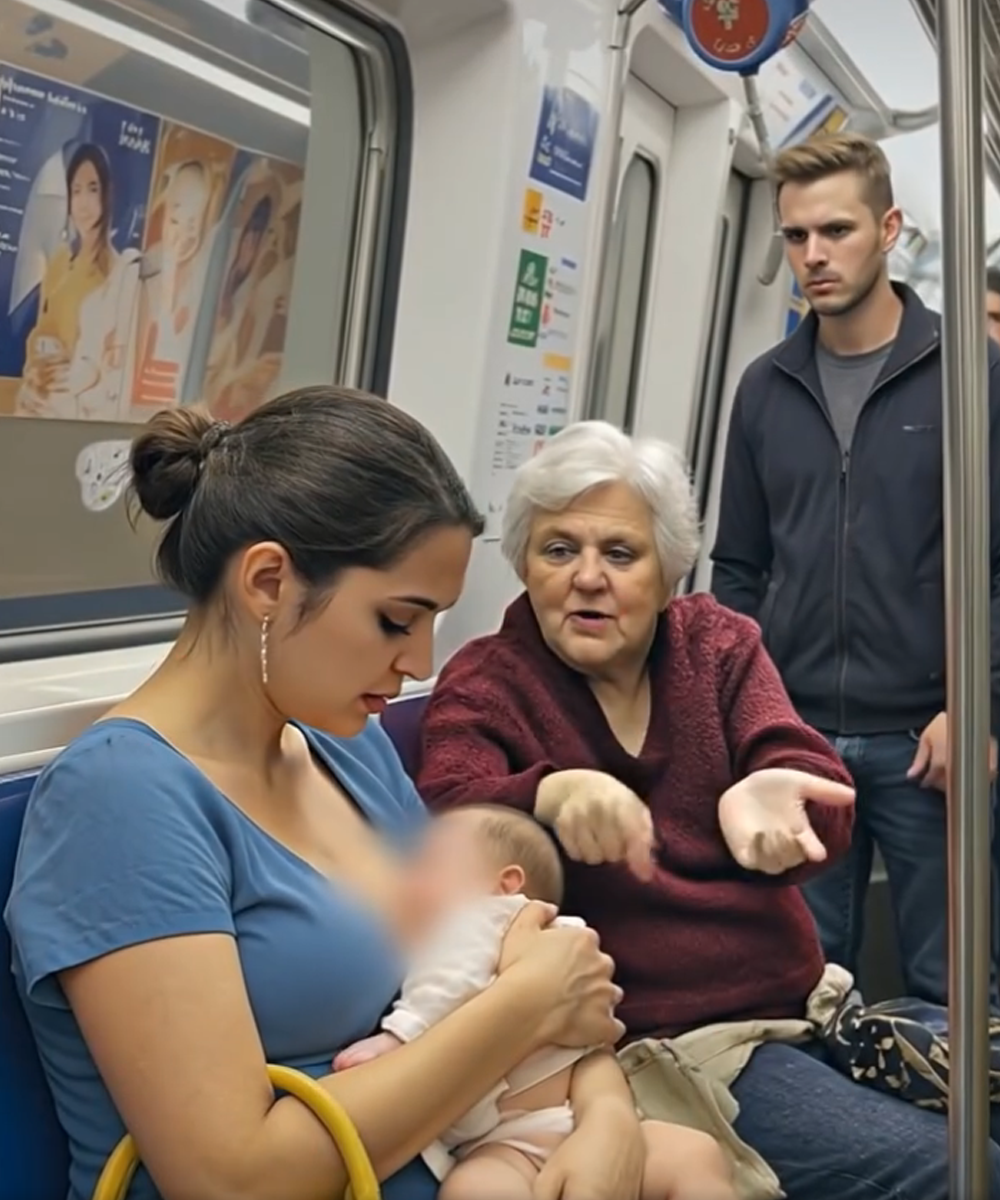
One chilly morning, a young mother boarded the subway with her baby in a stroller. The little one was peacefully asleep at first but soon began to cry. The mother gently whispered an apology to nearby passengers, explaining that the baby was simply hungry. Without hesitation, she reached for a small blanket and began nursing.
Most riders stayed polite and respectful. Some looked away, others simply focused on their own thoughts. Everything felt calm. This is how public life is supposed to work: a mother caring for her child, strangers extending the small courtesy of minding their own business, the unspoken social contract holding steady.
Nursing in public is a legally protected right in most places, and public health experts universally encourage it. But legality and social comfort do not always align, and this particular morning was about to demonstrate exactly that gap.
An Unexpected Confrontation
Suddenly, an older woman sitting nearby turned sharply toward the young mother and raised her voice. The young mother, clearly flustered but composed, replied softly. The older woman grew louder, complaining that "young people have no sense of decency" and demanding respect.
The tension in the carriage grew. Passengers glanced at one another, unsure how to respond. This is the moment psychologists call the bystander threshold: everyone recognizes that something wrong is happening, everyone waits for someone else to act, and the silence stretches.
The young mother's composure under pressure deserves recognition. Flustered but composed is a difficult state to maintain when someone is shouting at you in front of dozens of strangers while you are holding your baby. She did not escalate. She did not cower. She simply continued caring for her child with quiet dignity.
A Simple but Powerful Intervention
At that moment, a young man who had been standing quietly stepped forward. In a calm, steady voice, he addressed the older woman. Then, in a gesture that stunned everyone, he pulled a folded blanket from his backpack and offered it to the mother.
The train fell silent.
Consider what made this intervention so effective:
- He was calm. He did not match the older woman's volume or aggression, which would have turned a confrontation into a fight.
- He was specific. He addressed the situation directly rather than offering vague disapproval.
- He offered something practical. The blanket was not just a symbol; it was useful, and it reframed the moment from conflict to care.
- He acted. In a car full of people who all knew the older woman was wrong, he was the one who stood up.
The older woman, confronted with calm resolve and the silent witness of the entire carriage, had nowhere left to go. The performance of outrage requires an audience, and the audience had chosen its side.
Why Bystander Intervention Matters
Social scientists have studied the bystander effect for decades, ever since the case that gave it its name. The findings are consistent: people are less likely to help when others are present, because responsibility diffuses across the crowd. Everyone assumes someone else will act.
Breaking that pattern requires surprisingly little:
- Direct address. Speaking to the person causing harm, calmly and specifically, punctures the diffusion of responsibility.
- Practical help. Offering the target of harassment something concrete, a blanket, a seat, a phone number, shifts the dynamic instantly.
- Numbers. Once one person acts, others usually follow. The first intervener gives the rest of the crowd permission to care out loud.
The young man on the subway probably did not think of himself as brave. He likely just could not sit still while someone was being shamed for feeding her baby. That is often how it works. Courage in these moments rarely feels like courage. It feels like the alternative, doing nothing, has simply become impossible.
The Ripple Effect
What happened after the train fell silent is almost as important as the intervention itself. Moments like this recalibrate a whole car's sense of what is acceptable. Passengers who watched the young man step forward carry that template with them. The next time they witness harassment, the path from discomfort to action is a little shorter.
The young mother, too, carries something forward. She was publicly shamed and then publicly defended, and the defense is what she will remember when she tells this story. For her baby, there is nothing to remember, which is exactly as it should be. The adults handled it.
And the older woman? Perhaps she spent the rest of her ride reconsidering. Perhaps not. But she learned, in front of dozens of witnesses, that public shaming has limits, and that strangers will not always stay silent.
Lessons for the Rest of Us
- Nursing in public is normal and protected. A mother feeding her child deserves the same peace as anyone else on the train.
- Calm beats volume. The young man's steady voice accomplished what shouting never could.
- Practical kindness disarms conflict. The blanket did more than a lecture would have.
- You can be the first. The crowd is waiting for someone. Let it be you.
- Composure under fire is its own statement. The young mother's quiet dignity was as powerful as the intervention.
Frequently Asked Questions
What happened on the subway?
A young mother nursing her baby was verbally confronted by an older woman who objected to it. A young man intervened calmly, addressed the older woman, and offered the mother a blanket from his backpack, defusing the situation.
Is nursing in public legal?
Yes. Nursing in public is legally protected in all 50 U.S. states and in most countries. Public health authorities actively encourage it.
What is the bystander effect?
It is the well-documented tendency for individuals to avoid intervening in an emergency when others are present, because responsibility feels shared. Direct, calm action by one person often breaks the pattern.
What made the young man's intervention effective?
He stayed calm, addressed the situation directly, offered practical help, and acted when no one else would. His composure contrasted sharply with the older woman's aggression and won the silent support of the carriage.