Riddles have a unique way of capturing our attention. They seem simple at first, yet often lead us to overthink or make quick assumptions. One popular brain teaser that continues to puzzle people is this:
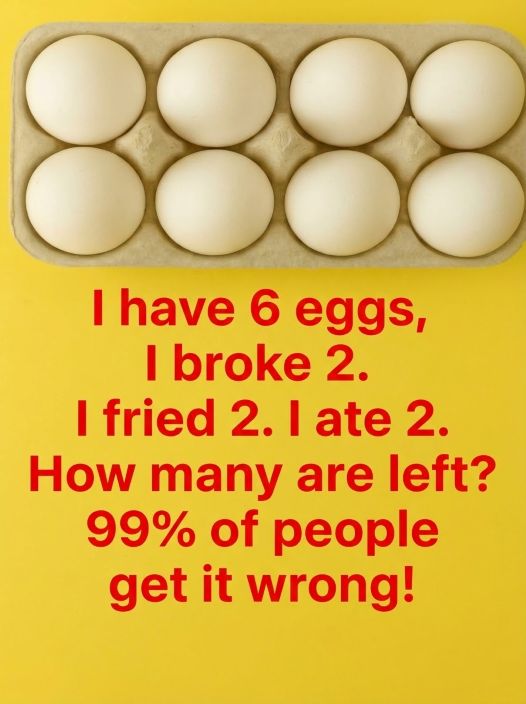
“I have 6 eggs. I broke 2. I fried 2. I ate 2. How many are left?”
It’s the kind of question that looks easy—but has a clever twist.
Why Many People Get It Wrong
When reading the riddle quickly, it’s natural to assume that each action involves different eggs. So some people mentally subtract:
- 2 eggs broken
- 2 eggs fried
- 2 eggs eaten
This leads them to believe all 6 eggs are gone. But that interpretation overlooks an important detail.
Looking at It Step by Step
Let’s slow down and break it apart logically:
- You start with 6 eggs.
- You break 2 eggs — these are the eggs you plan to cook.
- You fry those same 2 eggs — no new eggs are used here.
- You eat those same 2 eggs — again, not additional eggs.
So in reality, only 2 eggs total were used throughout the entire process.
The Correct Answer
If you began with 6 eggs and only used 2, then:
6 − 2 = 4 eggs remaining
The Lesson Behind the Riddle
This puzzle is a great example of how wording can shape our thinking. It encourages us to:
- Pay attention to detail
- Avoid making quick assumptions
- Think logically instead of rushing to an answer
Often, riddles like this aren’t about math—they’re about perspective.
Why We Enjoy These Challenges
Simple puzzles can be surprisingly engaging. They stimulate critical thinking and offer a small sense of accomplishment when solved. Whether you’re sharing them with friends or testing yourself, they’re a fun way to exercise the brain.
So next time you come across a tricky question, take a moment to think it through—you might discover that the answer is simpler than it seems.
Final Answer: 4 eggs are left.