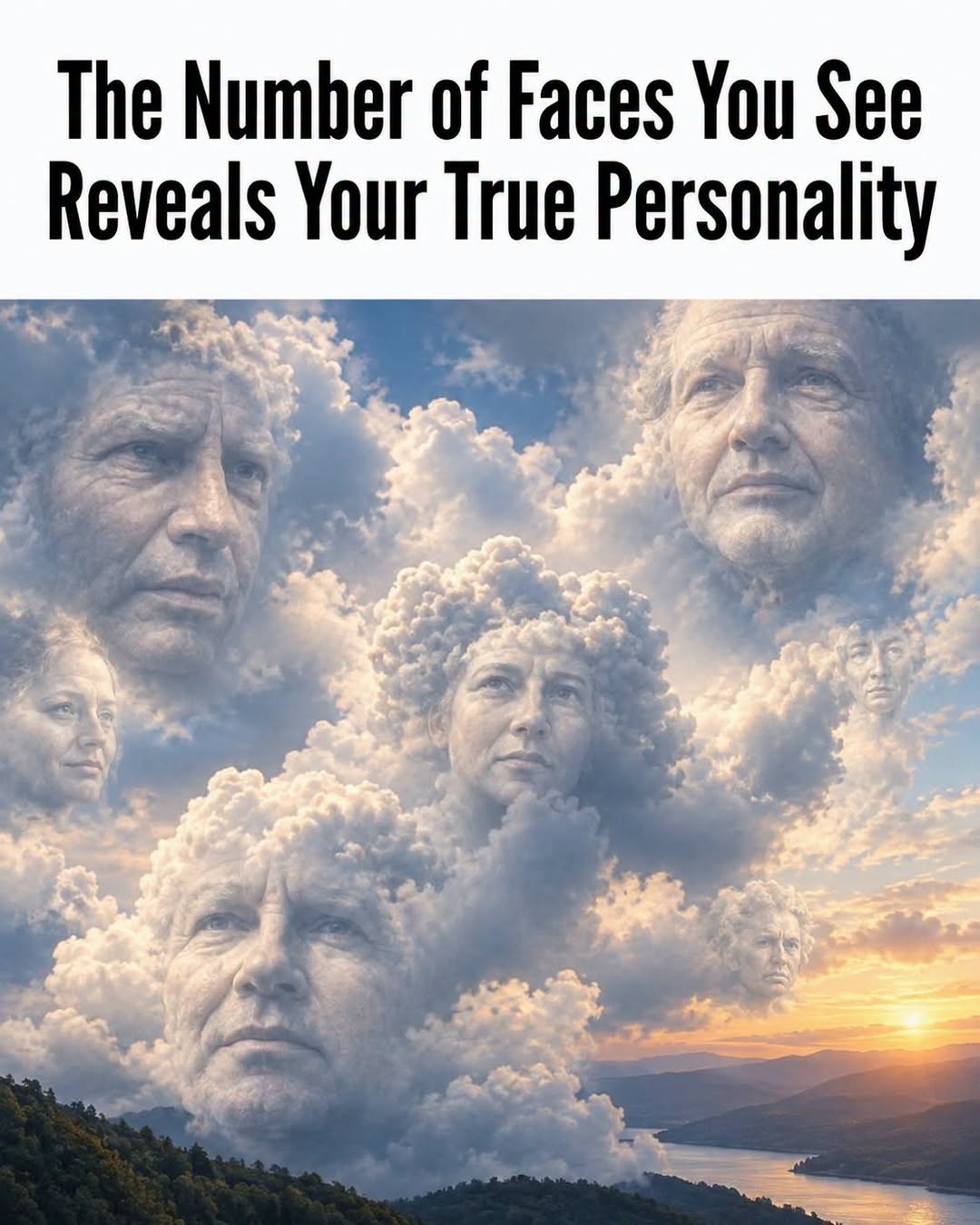
If You Found 1 to 3 Faces: You Focus on the Bigger Picture
If you spotted only a few faces, you may have naturally focused on the overall appearance of the image rather than searching every small section.
This does not mean that you failed the challenge. In fact, the purpose of the puzzle is simply to encourage careful observation and provide a fun way to interact with an image.
When looking at a complicated scene, some people naturally notice the main shapes first. They may recognize the general picture before paying attention to smaller details.
You might also enjoy activities where the overall scene is more important than tiny visual elements. Looking at clouds, landscapes, photographs, or other relaxing images can sometimes encourage this kind of observation.
Of course, finding only a few faces does not tell us anything definite about your personality. You may simply have approached the puzzle differently from someone else.
And if you look again later, you may discover several faces that you completely missed the first time.
If You Found 4 to 6 Faces: You Noticed a Mix of Details
Finding between four and six faces means you probably spent enough time examining the image to notice more than the most obvious shapes.
You may have looked at the larger picture first and then started paying attention to smaller areas.
This type of visual puzzle can be interesting because the image changes depending on how you approach it. When you concentrate on one section, you may suddenly notice a shape that was almost invisible when you were looking at the entire picture.
You might also find yourself wondering how other people interpret the same image.
One person could look at a particular cloud and see a face immediately, while another person might see nothing unusual at all. Both interpretations can make sense because the shapes are not actual drawings of faces. They are patterns that the brain can interpret in different ways.
If you found four to six faces, you may have simply reached a comfortable balance between looking at the larger scene and searching for hidden details.
If You Found 7 to 9 Faces: You Looked Closely for Hidden Details
If you discovered between seven and nine faces, you probably spent a significant amount of time exploring the image.
You may have moved your attention from one section to another, looking for unusual shapes that could resemble eyes, noses, mouths, or complete faces.
This is where the puzzle becomes more challenging.
Once you discover the most obvious faces, finding additional ones can require a second or even third look. You may need to change your focus, examine areas that seem unimportant, or look at the image from a slightly different perspective.
People who enjoy hidden-picture games, optical puzzles, pattern challenges, and similar visual activities may find this kind of challenge particularly entertaining.
Still, your score should be treated simply as part of the game. Finding more faces does not prove that someone is more observant, intelligent, creative, or talented than another person.
Sometimes the difference comes down to where someone happens to look first.
If You Found 10 or More Faces: You Explored Almost Every Corner
Did you manage to find ten or more faces?
If so, you probably spent plenty of time exploring the image and looking beyond the most noticeable shapes.
At this point, you may have started seeing faces in areas that initially appeared completely ordinary. A small collection of clouds can suddenly take on a different appearance when several shapes seem to line up.
This is one of the most enjoyable parts of hidden-image puzzles. Once your attention becomes focused on finding a particular shape, you may begin noticing possibilities that were easy to overlook at first.
You might also enjoy activities involving visual patterns, photography, drawing, storytelling, or other forms of observation and imagination.
However, there is an important point to remember: spotting a larger number of faces does not automatically mean that you are more creative than someone who found fewer.
This challenge is designed for entertainment rather than scientific measurement.
Your result simply tells us how many shapes you were able to identify in this particular image.
Why Do We See Faces in Clouds?
There is a simple reason why people sometimes recognize familiar shapes in random patterns.
Our brains are constantly looking for recognizable forms. When we encounter an unclear shape, the brain may try to connect the available visual information with something familiar.
That is why clouds can sometimes look like animals, buildings, people, or faces.
The same thing can happen with other everyday objects. A pattern on a wall might appear to have eyes. A rock might resemble an animal. Shadows can sometimes look like figures.
This experience is commonly referred to as pareidolia, a term used to describe perceiving a familiar or meaningful image in an ambiguous visual pattern.
The important thing is that the shape does not necessarily contain an actual face.
Instead, your brain is interpreting the arrangement of lines, shadows, light, and other visual details as something recognizable.
That is one reason these puzzles can be so fascinating.
The Same Picture Can Look Different to Different People
One of the most interesting things about visual puzzles is that people do not always notice the same details.
Imagine showing the exact same image to several friends.
One person might immediately point toward a face near the top of the picture. Another might notice a completely different shape on the opposite side. Someone else might initially see nothing but clouds.
After the first person points out a hidden face, however, the others may suddenly see it too.
This can make the image feel as though it has changed, even though nothing about the picture has actually changed.
Your attention has simply shifted.
That is why it can be useful to take your time rather than trying to solve the puzzle as quickly as possible.
Try Looking at the Picture Again
If you finished the challenge and believe you found only a few faces, don’t give up yet.
Look at the image again.
This time, avoid concentrating only on the most obvious areas. Slowly scan from one side to the other. Examine the spaces between larger shapes. Pay attention to unusual arrangements that could resemble facial features.
Sometimes a hidden face becomes easier to recognize after you already know what you are searching for.
You may also notice that turning your attention away for a moment and then looking back at the image can make certain shapes easier to see.
There is no time limit, so there is no need to rush.
Don’t Be Surprised If Your Answer Changes
It is also possible that you will get a different number the second time you look at the picture.
Perhaps you counted six faces initially and then discovered two more later.
Or maybe you saw a shape that looked like a face at first but decided that it was simply part of the cloud after taking a closer look.
That is completely normal for an image-based puzzle.
The boundaries between shapes can sometimes be unclear, especially when the image contains natural patterns such as clouds, shadows, or irregular forms.
Your interpretation may therefore change depending on where you focus your attention.
There Is No Perfect Score
The most important part of this challenge is not whether you found the highest possible number of faces.
It is the process of looking closely and noticing how differently the same image can be interpreted.
Someone who finds three faces may enjoy the puzzle just as much as someone who finds ten.
The number you discover also cannot reliably tell you whether you are intelligent, creative, highly observant, or have a particular personality type. Those are much more complicated qualities than a simple visual puzzle can measure.
This is simply a lighthearted activity designed to test your attention and encourage you to look at a familiar type of scene in a different way.
So, How Many Hidden Faces Did You Find?
Now that you have taken a close look at the image, what was your final number?
Did you notice only a few obvious faces, or did you continue searching until you found shapes hidden throughout the scene?
Visual puzzles like this can be surprisingly addictive because once you discover one hidden shape, you naturally want to find another.
The next time you look at a cloudy sky, you may even find yourself searching for familiar shapes without realizing it.
You might see a face, an animal, a person, or something completely different.
That’s the fun of visual interpretation: the same pattern can inspire different ideas depending on where you look and what your eyes notice first.
So take one final look at the picture, count the faces you can identify, and compare your answer with the categories above.