
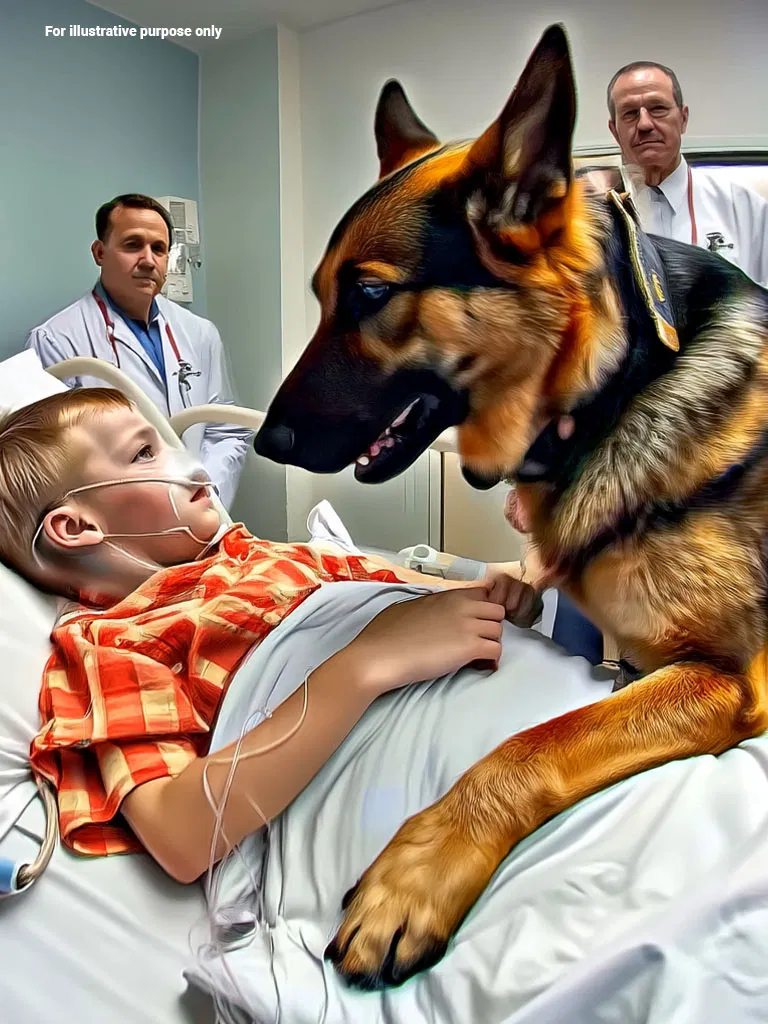
Loyal Dog Shocks Doctors Just Before Boy's Surgery, Then Everyone Finally Understands Why
Hospitals are often filled with tension, especially before a major operation. Families wait anxiously, doctors prepare carefully, and emotions run high. But in one extraordinary case, it was not just the people in the room who sensed the importance of the moment. It was also a dog.
A young boy was scheduled for surgery, and like many children, he found comfort in the presence of his loyal four-legged friend. Before being taken into the operating room, the boy hugged his dog tightly, whispering into its fur as if the animal could understand his fears. The staff allowed this touching moment, believing it would help calm the boy.
Then something completely unexpected happened. Just as the doctors moved closer, the dog suddenly leapt off the bed and lunged toward one of them. The medical team was stunned. Nurses gasped, and the boy's parents froze in shock. Why would such a gentle dog suddenly behave so aggressively?
At first, everyone thought it was simply fear or stress. But within seconds, the truth became clear, and it left the entire room speechless. The dog had sensed something unusual about the doctor's movements. In fact, the animal's instincts had picked up on a serious issue that even the professionals had not noticed right away. What seemed like aggression turned out to be a desperate warning. The loyal companion was not attacking out of anger. It was trying to protect the boy from a hidden danger.
Once the reason behind the behavior was uncovered, the atmosphere shifted from fear to awe. The medical staff realized they were witnessing an incredible example of a dog's intuition, a reminder that animals can sometimes detect what humans cannot. The surgery eventually went ahead, but this extraordinary moment remained etched in everyone's memory. Doctors later admitted that the dog's reaction had prevented what could have been a serious complication. The boy's parents were moved to tears, grateful that their son had such a devoted guardian by his side.
A Routine Goodbye That Was Never Routine
Pre-surgery goodbyes between children and their pets happen in hospitals more often than people realize. A child facing an operation is scared, and the familiar weight of a dog leaning against the bed can lower that fear in a way no reassurance from an adult can match. Staff members know this, which is why the moment was allowed to happen at all.
What no one expected was the dog's reaction seconds later. Dogs are creatures of habit and pattern. A calm family dog that lunges at a person is not acting randomly. It is responding to something it has noticed: a shift in posture, an unusual scent, a tension in movement, or a detail that falls outside its understanding of normal. In this case, the dog's sudden focus on one particular doctor was the clue. The room read it as aggression. The dog meant it as a warning.
What Dogs Can Pick Up That We Miss
Dogs experience the world through senses that are far more sensitive than our own. Their hearing catches frequencies we cannot hear, and their sense of smell is dramatically stronger than a human's. They are also expert readers of body language, often noticing small changes in the way a person moves long before we consciously register anything.
This sensitivity explains why stories like this one keep surfacing. Service and medical alert dogs are trained to notice physical changes in people, such as shifts associated with blood sugar drops or seizures, and to respond with a specific behavior. Therapy dogs working in hospitals are chosen partly for their steady, observant temperaments. Even untrained pet dogs have been known to paw at, stare at, or refuse to leave the side of a person who later turned out to need medical attention.
None of this makes dogs into diagnosticians. A dog cannot tell a doctor what is wrong, and its behavior should never replace professional medical judgment. But a dog's reaction can be a valuable signal that something deserves a second look, which is exactly what happened in this hospital room. The dog noticed something unusual about the doctor's movements, the staff paid attention, and a potential complication was caught before the surgery proceeded.
Why Hospitals Sometimes Welcome Dogs
Many hospitals and care facilities now run pet therapy and visitation programs. These programs bring trained, well-behaved dogs into wards to visit patients, especially children and elderly people. The documented goals are straightforward: reduce stress, lower anxiety, and give patients a comforting, normal moment during a frightening stay.
There are strict rules around these programs. Visiting dogs must be healthy, vaccinated, clean, and evaluated for temperament. Handlers supervise every interaction. Patients with certain conditions, such as weakened immune systems or open wounds, may not be eligible for visits. The system is designed to protect both the patient and the animal.
The moment in this story was different from a formal therapy visit, since this was the boy's own pet, but the underlying principle is the same. A familiar animal can steady a frightened child. The surprise was that the dog ended up steadying the entire medical team as well.
What To Do If Your Dog Acts Strangely Around a Person
Most of the time, a dog that suddenly focuses on someone is reacting to something harmless: an unfamiliar scent, a hat, an unusual gait, or nervous energy it does not understand. But the sensible response is to take the behavior seriously without overreacting.
- Stay calm. A panicked response can escalate the dog's agitation.
- Observe what the dog is actually reacting to. Is it the person's hands, their movement, their scent, or something they are carrying?
- Create distance. Move the dog a few steps back and see whether the behavior continues.
- Do not punish the reaction. Correcting the dog may suppress the warning without addressing whatever triggered it.
- Ask questions. In a medical setting, mention the behavior to staff. In everyday life, consider whether the person may be unwell or distressed, since dogs often react to signs of pain or anxiety.
- Follow up with a veterinarian or trainer if the behavior repeats. A sudden change in temperament can occasionally reflect the dog's own health issue, such as pain or vision changes, and that deserves a checkup too.
Frequently Asked Questions
Can dogs really sense when something is wrong with a person?
Dogs have been documented reacting to a wide range of physical and emotional changes in people, including seizures, blood sugar shifts, and acute stress. Researchers believe this comes down to their extraordinary senses of smell and their skill at reading body language, not any mysterious power.
Are pet dogs allowed in hospitals?
Policies vary. Many hospitals allow therapy dogs through formal programs and some allow a patient's own pet for short pre-surgery visits at the discretion of staff. Always ask the facility about its rules in advance.
Should I worry if my dog suddenly dislikes a particular person?
Not necessarily. Dogs form quick opinions based on scent, body language, and past associations, and many of those opinions are harmless. Watch for patterns, though. A repeated, intense reaction to one person is worth noting, especially in settings involving children or vulnerable family members.
How can I teach my dog to be calm in stressful settings like hospitals?
Gradual exposure, basic obedience training, and positive reinforcement help. Start with short, calm outings and reward settled behavior. Professional therapy dog organizations also offer structured training and certification for dogs suited to the work.
How You Can Help
Stories like this one are a reminder of how much dogs give to the people who love them. If this story moved you, here are general ways to support dogs in need:
- Adopt from a shelter or rescue instead of buying, and give an adult or senior dog a chance.
- Foster a dog temporarily. Fostering frees up shelter space and prepares the dog for a permanent home.
- Donate to local shelters, rescue groups, or therapy dog programs, even small amounts help cover food and medical care.
- Volunteer your time: walk dogs, help with events, or offer transport.
- Support spay and neuter programs in your community to reduce the number of homeless animals.
This article is for informational purposes only. If your pet shows concerning symptoms, please consult a licensed veterinarian.

