A Simple Boundary That Changed Everything
Eleanor had lived in her quiet suburban home for more than thirty years. She was careful about household expenses, so when her electricity bill suddenly increased, she immediately started looking for an explanation.
At first, she assumed the higher bill was caused by normal changes in electricity use. But after several days, the increase continued.
Then one evening, Eleanor noticed something unusual.
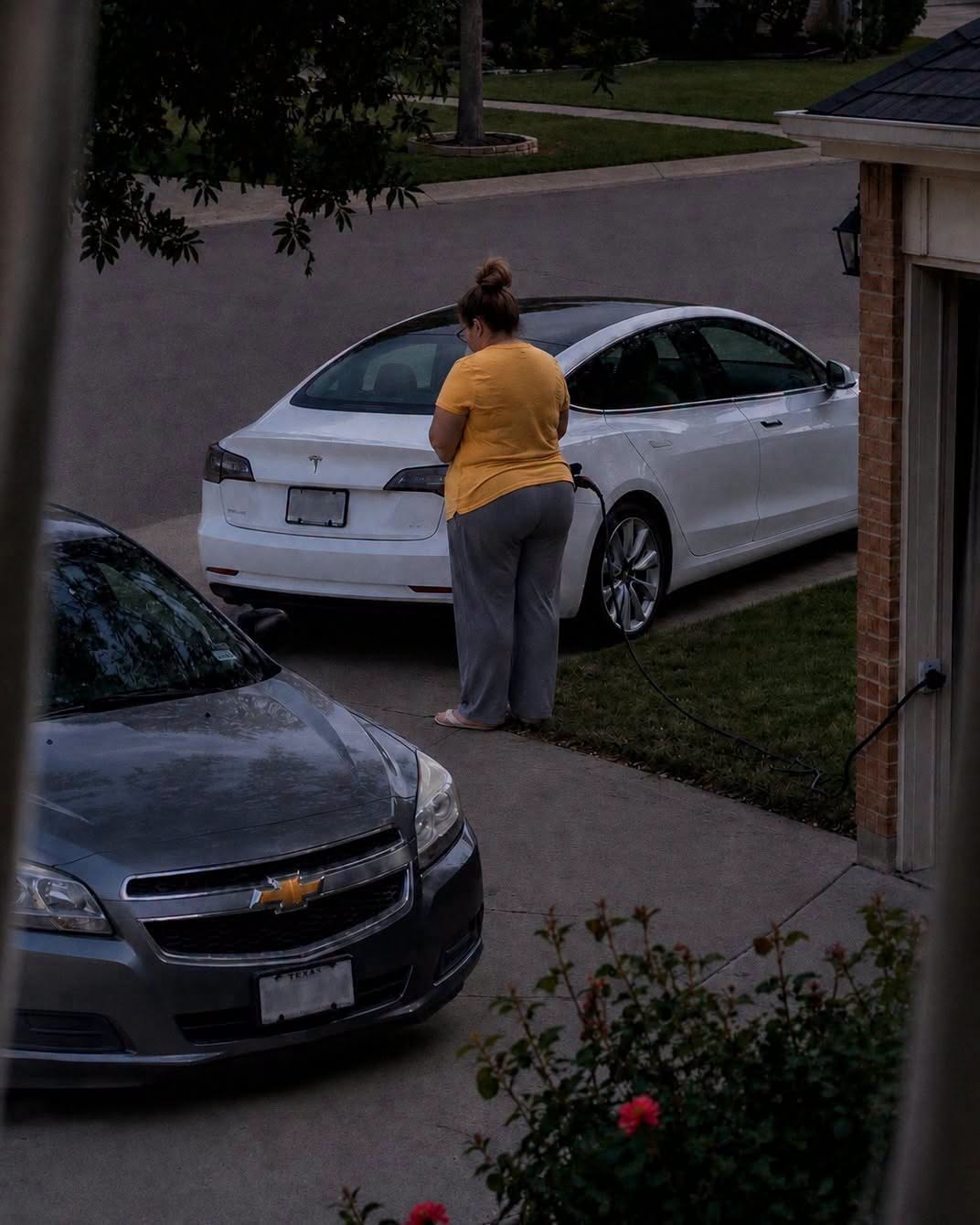
A faint humming sound came from outside near her garage. When she looked through the window, she saw her neighbor Monica’s electric car parked nearby. A charging cable was connected to an outdoor electrical outlet on Eleanor’s property.
Eleanor was surprised. She had never agreed to let anyone use her electricity for charging.
A Calm Conversation
The next morning, Eleanor spoke with Monica about what she had noticed.
Monica explained that she had been using the outlet because it was convenient. She said she only needed to charge the car for a short time each evening.
Eleanor understood that Monica probably had not considered the situation a serious issue. Still, Eleanor explained that the electricity was part of her household expenses and that she was not comfortable with someone using the outlet without asking.
She simply asked Monica to stop using it.
It was an uncomfortable conversation, but Eleanor realized something important: being a good neighbor does not mean allowing other people to cross your boundaries.
Small Boundaries Can Make a Big Difference
Looking back, Eleanor remembered other small situations in which she had avoided speaking up because she did not want to create tension with people around her.
She had often chosen silence because it seemed easier.
But the charging situation showed her that ignoring a problem does not necessarily make it disappear. Sometimes, a simple and respectful conversation is enough to solve it.
Instead of starting an argument, Eleanor decided to make her property boundaries clearer.
She placed a small sign near the garage reminding visitors that the outdoor electrical outlet was for household use only.
She also made sure her garden items and outdoor belongings were kept within her property.
The Situation Finally Improved
A few days later, Monica returned home and noticed the sign.
This time, she did not connect the charging cable.
Eleanor later spoke with her again, and Monica apologized for assuming that the outlet was available for regular use.
The conversation ended much more positively than Eleanor had expected.
There was no major argument and no lasting conflict. The problem had simply required two neighbors to communicate clearly.
Over time, their relationship returned to normal.
What Eleanor Learned
The experience taught Eleanor that setting boundaries does not have to be aggressive or unfriendly.
A boundary can be as simple as saying:
“I’m happy to be a good neighbor, but I need you to ask before using my property or electricity.”
Clear communication can prevent misunderstandings and protect relationships at the same time.
Eleanor realized that kindness and boundaries can exist together. Helping others is a choice, not an obligation.
Sometimes, protecting your time, property, and resources begins with one simple sentence: “Please ask me first.”
A Simple Lesson for Everyday Life
Whether the issue involves electricity, parking, borrowed belongings, or personal space, respectful boundaries can make everyday relationships easier.
You do not always need a confrontation to solve a problem. Often, calmly explaining what you are comfortable with is enough.
For Eleanor, one small conversation helped restore control over her household expenses—and reminded her that standing up for herself could be done with both kindness and respect.