
Starving Great Dane Forced to Eat Stones Just to Survive Until a Loving Family Stepped In
A Desperate Fight for Survival
Some rescue stories remind us just how powerful kindness can be. Angelo's journey is one of those unforgettable tales that renews our faith in compassion.
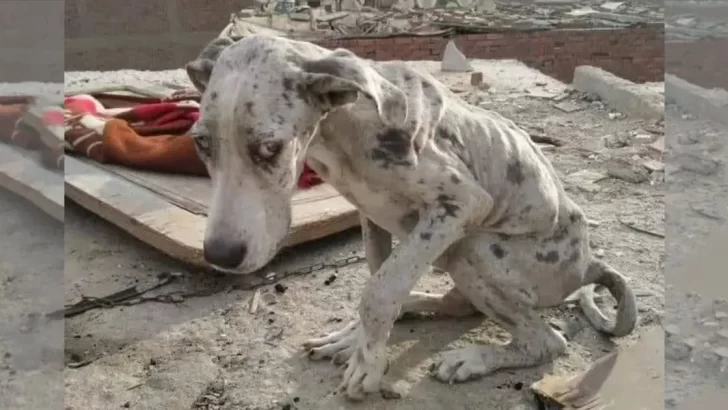
When Angelo, a young Great Dane, was found wandering the streets, he was barely holding on. Severely underweight and too weak to stand, the poor pup had been struggling alone for far too long. His ribs showed through his dull coat. His eyes, though dimmed by exhaustion, still held a flicker of the gentle spirit underneath.
A woman devoted to saving stray dogs noticed him and immediately stepped in. She had seen suffering before, but Angelo's condition was among the worst she had encountered. She knew he needed help urgently, and she refused to walk past him.
But once Angelo was examined, rescuers discovered something heartbreaking: the gentle giant had been eating stones simply to survive. His stomach was so full of rocks that he could not eat, drink, or even relieve himself. It is difficult to imagine the desperation that drives an animal to fill its belly with stones, but starvation rewires survival instincts. When no food exists, anything that might quiet the hunger becomes worth trying.
Angelo needed emergency surgery, and even then, his recovery was uncertain.
Understanding Pica: Why Starving Animals Eat Stones
Angelo's stone-eating is an extreme example of pica, the compulsion to eat non-food items. In animals, pica almost always signals severe nutritional deficiency, gastrointestinal distress, or psychological trauma. For a starving dog, the behavior follows a tragic logic:
- Empty stomach pain: A completely empty stomach causes painful cramping. Stones provide bulk that temporarily dulls the ache.
- Instinct misfiring: A dog's foraging instincts do not shut off during starvation. They intensify, driving the animal to mouth anything remotely solid.
- Learned desperation: Once a starving animal discovers that stones quiet hunger pangs briefly, the behavior reinforces itself.
- Mineral craving: Severe deficiency can trigger cravings for the mineral content in soil and stones.
Veterinarians warn that ingested stones can cause life-threatening blockages, perforate intestines, and damage teeth and gums. Angelo's stomach, packed with rocks, had reached a critical point where normal digestive function was impossible. Without surgical intervention, he would not have survived.
A Rescue Community Unites
Hanan from Furever Rescue Foster took charge of Angelo's case. The surgery was expensive, and he would need long-term care, so she turned to social media for help. She shared Angelo's story honestly: the stones, the starvation, the uncertain prognosis, and the gentle giant underneath it all who deserved a chance.
The response was immediate and overwhelming. Animal lovers from around the world shared his story, donated to his care, and sent messages of encouragement.
That is where Justin Finning and his wife, Deborah, first saw Angelo's photo. Even though he was in another country, their hearts went out to him instantly. With over 30 years of experience rescuing Great Danes with special needs, they knew they had to act. They understood exactly what Angelo's recovery would require: not just medical care, but patience, expertise, and the specific knowledge that comes from decades of working with giant breeds.
Together with Hanan, they launched a fundraiser to cover Angelo's surgery and the intensive care he would need afterward. The rescue community, spanning continents, rallied behind one starving dog.
The Surgery That Saved His Life
Removing a stomach full of stones is a delicate, high-risk procedure, especially on a severely malnourished patient. Angelo's veterinary team had to carefully extract the rocks, assess the damage to his stomach and intestines, and repair any internal injuries, all while managing the risks of anesthesia on a weakened body.
The surgery was a success, but it was only the beginning. Post-operative care for a starvation case is painstaking:
- Gradual refeeding: After prolonged starvation, food must be reintroduced slowly to avoid refeeding syndrome, a potentially fatal metabolic shift.
- Wound monitoring: Surgical sites on malnourished animals heal slowly and require vigilant care.
- Nutritional rebuilding: High-quality, easily digestible food in small, frequent meals helps rebuild strength without overwhelming the system.
- Emotional rehabilitation: Starving strays often struggle with food anxiety, fear, and trust. Patient, consistent kindness is the only cure.
Angelo's caregivers provided all of this and more. Every small milestone, his first comfortable meal, his first steady steps, his first wagging tail, was celebrated by the community that had invested in his survival.
Why Great Danes Need Experienced Rescuers
Justin and Deborah Finning's three decades of experience with special-needs Great Danes made them ideal advocates for Angelo. Giant breeds present unique rescue challenges:
- Medical costs scale with size. Everything from surgery to medication to food costs significantly more for a 150-pound dog than for a small breed.
- Special needs are common. Great Danes are prone to bloat, joint issues, heart conditions, and other health problems requiring knowledgeable care.
- Space and strength matter. Handling a giant breed safely requires physical capability and appropriate facilities.
- Fewer adopters qualify. The pool of homes able to accommodate a giant dog with medical needs is small, making experienced foster networks essential.
- Emotional needs are profound. Despite their size, Great Danes are famously sensitive, often called gentle giants for good reason. They bond deeply and suffer keenly from neglect.
The Finning's expertise meant Angelo's case was managed by people who understood exactly what he needed, medically and emotionally. That knowledge, freely given, is the backbone of the rescue world.
The Power of Rescue Networks
Angelo's story illustrates how modern animal rescue works at its best. No single person could have saved him alone. It took:
- The woman on the street who noticed him and refused to look away
- Hanan and Furever Rescue Foster, who coordinated his medical care
- The veterinary team, who performed the life-saving surgery
- Justin and Deborah Finning, who brought decades of giant-breed expertise
- The social media community, whose donations funded his treatment
- Every person who shared his story, expanding the circle of help
This is the rescue ecosystem: strangers connected by compassion, each contributing what they can, together achieving what none could alone. Angelo's transformation from a stone-filled, starving stray to a dog with a future is their collective victory.
A New Chapter for Angelo
Today, Angelo's story continues. The stones are gone. The starvation is a memory. In their place: regular meals, medical care, gentle hands, and the slow rebuilding of trust. For a dog who once filled his belly with rocks to survive, every comfortable meal is a small miracle.
His journey reminds us that rescue is not just about saving lives. It is about restoring dignity. Angelo deserved more than survival. He deserved comfort, kindness, and love. Thanks to the people who refused to give up on him, he is finally getting all three.
What Angelo's Story Teaches Us
- Notice suffering. Angelo survived because one woman paid attention. Most rescue stories begin with someone who chose not to look away.
- Act quickly. Starvation cases deteriorate fast. Early intervention saves lives and reduces suffering.
- Support rescue organizations. Donations, fostering, and sharing stories on social media all make tangible differences.
- Giant breeds need dedicated advocates. Their size makes them expensive to rescue and harder to place, so experienced rescuers are invaluable.
- Kindness compounds. One person's compassion inspired a global community. Every act of care creates ripples far beyond what we can see.
Frequently Asked Questions
What happened to Angelo the Great Dane?
Angelo was found as a starving stray, so malnourished that he had been eating stones to survive. His stomach was full of rocks, requiring emergency surgery. Hanan from Furever Rescue Foster coordinated his care, and Justin and Deborah Finning, experienced Great Dane rescuers, helped fundraise for his treatment.
Why do starving dogs eat stones?
This is an extreme form of pica, driven by severe nutritional deficiency. An empty stomach causes painful cramping, and stones provide bulk that temporarily dulls the ache. Starvation intensifies foraging instincts, driving desperate animals to mouth anything solid.
Who are Justin and Deborah Finning?
They are experienced animal rescuers with over 30 years of expertise rehabilitating Great Danes with special needs. They saw Angelo's story on social media and partnered with Hanan to fundraise for his surgery and long-term care.
What does recovery from starvation involve?
Recovery requires gradual refeeding to avoid dangerous metabolic shifts, wound monitoring, nutritional rebuilding with small frequent meals, and emotional rehabilitation to address food anxiety and trust issues. It is a slow, careful process.
How can people help rescue dogs like Angelo?
Donate to reputable rescue organizations, foster animals in need, share rescue stories on social media to expand their reach, volunteer with local shelters, and consider adopting, especially harder-to-place animals like giant breeds with medical needs.


