
The Doctor Who Held My Hand: A Story of Loss, Healing, and Hope
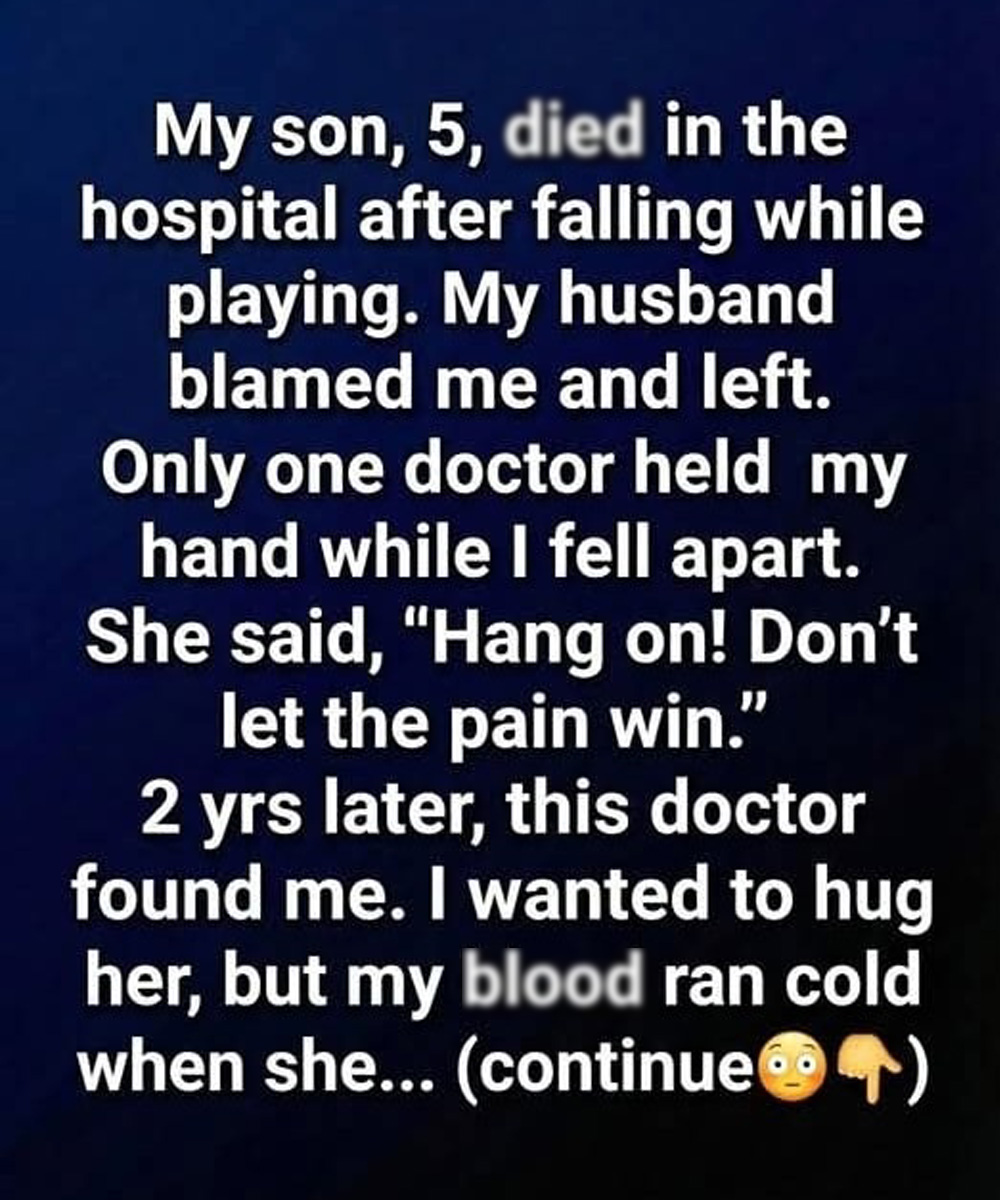
On a warm afternoon, Elena watched her seven-year-old son Leo laugh and climb at their neighborhood playground. It was one of his favorite places, a space filled with joy, sunlight, and the carefree energy of childhood. But in a single, heartbreaking moment, everything changed. Leo fell. There was no warning, no time to react. Within minutes, he was rushed to the hospital as doctors worked urgently to save him. Elena waited, holding on to hope, praying for a miracle that never came. Despite every effort, Leo was placed on life support. The hospital room felt unreal: voices softened, time slowed, and everything seemed distant. When the machines were finally turned off, silence filled the space in a way words never could. That was the moment Elena understood the weight of loss.
The Days That Followed
Life after that day was never the same. At home, memories of Leo were everywhere: his shoes by the door, his backpack untouched, his drawings scattered across his room. Each item told a story that now had no ending. The early weeks of grief are often the hardest. Sleep becomes strange, food loses its taste, and ordinary tasks feel enormous. Friends and relatives may offer comfort, but no one can fill the absence. For parents who have lost a child, this is a reality shared by far too many families, and each family finds its own way through it.
Grief also changed Elena's marriage. Her husband, Mark, struggled with overwhelming guilt, blaming himself for what had happened. Instead of healing together, the pain drove them apart, and soon, Elena found herself facing the loss alone. This is a painful but common pattern. Grief counselors often explain that partners can grieve on completely different timelines and in different ways. One parent may need to talk endlessly while the other turns inward. One may want to keep the child's room exactly as it was, while the other needs to change it. Neither way is wrong, but the difference can feel like distance. What matters is finding a way to respect each other's process, and when the gap feels too wide, speaking with a grief counselor together can help.
One Hand in the Darkness
In the midst of that darkness, one person made a difference. Dr. Aris, a compassionate physician, stayed close during Elena's hardest moments. She offered not just medical care, but something deeper: human connection. Holding Elena's hand, she gently reminded her, "Don't let the pain define everything." Those words stayed.
That small act of compassion points to something larger about healing. Medical professionals see families at their most vulnerable, and the difference between being treated and being truly cared for often comes down to simple human presence. A doctor who listens without rushing, who explains clearly, who stays a few extra minutes when it matters most: these moments can change the course of a person's grief. Studies on patient care consistently show that empathy from healthcare providers helps families cope with loss and feel less alone. Dr. Aris did not try to fix Elena's pain, because it could not be fixed. She simply stayed.
The Long Road Back
The months that followed were difficult. Some days, even getting out of bed felt impossible. Other days, Elena took small steps forward: walking outside, speaking to others, and slowly rebuilding a sense of purpose. This is how grief really works. It is not a straight line from sadness to acceptance. It comes in waves. A quiet morning can feel manageable, and then a song on the radio or a child's backpack on a stranger's shoulder can bring everything back at once. Counselors often say the goal is not to "get over" the loss, but to learn how to carry it.
Elena joined a support group and began simple healing rituals. She planted Leo's favorite flowers and wrote letters to him, expressing thoughts she could no longer say out loud. Over time, those small acts became a path forward. Support groups for bereaved parents offer something few other places can: a room full of people who understand without needing explanations. There is no pressure to be strong, no timeline to follow, and no judgment about how the grief looks from the outside. Simple rituals, like planting flowers, lighting a candle, or writing letters, give grief a shape. They create moments when the person is remembered with love rather than only with pain.
If you are supporting someone who is grieving, remember that small, steady gestures matter more than grand ones. Keep showing up after the funeral ends and the calls stop coming. Offer practical help, like meals or rides, rather than vague offers. Say the person's name. Many grieving parents say their greatest fear is that their child will be forgotten, and hearing the name spoken with love can mean more than any advice.
Leo's Light
Two years later, Elena attended a conference focused on trauma and child safety. There, she heard a familiar voice: Dr. Aris. After the session, they reconnected, and the doctor shared her own personal experience, one that deepened her empathy and commitment to helping families in crisis. That meeting became a turning point. Together, they created Leo's Light, a program dedicated to supporting families facing medical trauma while promoting awareness and prevention.
Turning loss into purpose is something many grieving families describe as a turning point in their own healing. It can take many forms: a foundation, a fundraiser, a playground improvement, a scholarship, or simply showing up for other families going through the same thing. None of it replaces what was lost. But it gives the love somewhere to go, and it reminds families that their child's life continues to matter in the world.
Finding Hope Without Letting Go
Today, Elena shares her story to help others navigate grief and find strength during life's most difficult moments. While the pain of losing Leo never disappeared, she discovered that healing doesn't mean forgetting: it means finding a way to carry love forward. Her journey is a reminder that even in the darkest times, compassion, connection, and purpose can help guide the way toward hope.
Frequently Asked Questions
How long does grief last after losing a child?
There is no fixed timeline. Grief changes shape over the years, but it does not simply end. Many parents find that with time, support, and healing work, the grief becomes something they can carry rather than something that carries them.
Can grief counseling help couples who are drifting apart?
Yes. Many couples find that grief affects them differently, and counseling provides a safe space to understand each other's experience and rebuild connection. Seeking help early is a sign of strength, not failure.
What are meaningful ways to honor a loved one's memory?
Planting a garden, creating a photo book, writing letters, supporting a cause they cared about, or establishing a family tradition in their name are all meaningful options. The best choice is the one that feels right to you.
How can friends and family support a grieving parent?
Show up consistently, offer specific practical help, listen without trying to fix anything, and keep saying the child's name. Avoid telling grieving parents to move on or suggesting you know exactly how they feel.
Where can grieving parents find support groups?
Many communities offer bereavement groups through hospitals, hospices, faith organizations, and grief support networks. Online communities can also provide connection for those who cannot attend in person.
This article is for informational purposes only and is not medical advice. Please consult a qualified professional.

