The Night I Followed My Wife and Discovered the Meaning of True Love
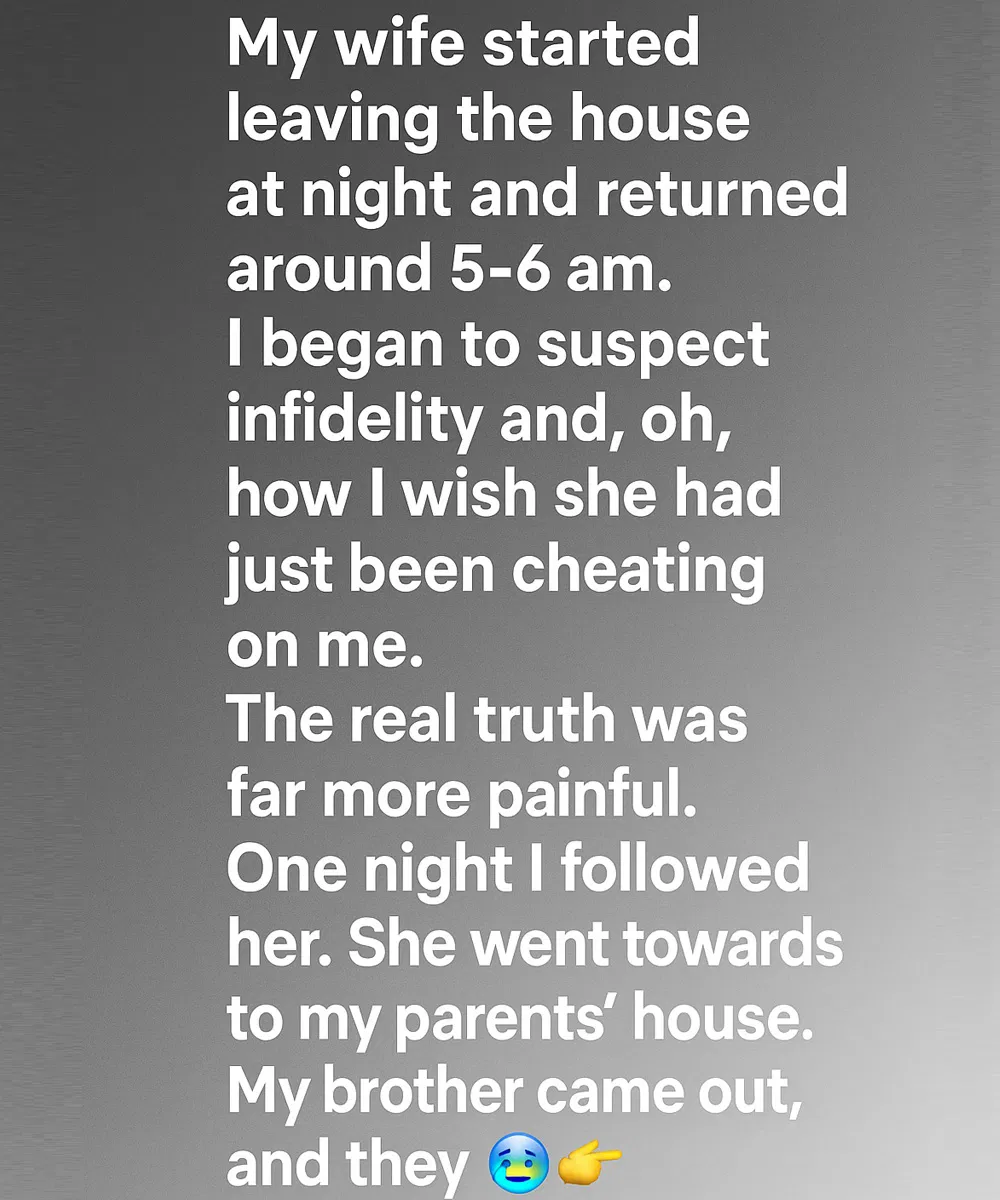
There is a reason stories like this one travel so far. A husband notices his wife slipping out of the house night after night. Suspicion grows. He follows her, braced for betrayal, and instead finds her kneeling beside his own ailing father, quietly caring for him so her husband would not have to carry the worry. It is a story about how wrong our assumptions can be, and about a kind of love that does its work in the dark, asking for no credit.
Stories like this one resonate because they touch two very real fears: the fear of being betrayed by the person closest to us, and the fear that someone we love is suffering alone. The details of any single story told online cannot be verified, so it is best to take the anecdote as a starting point rather than a proven event. What is genuinely useful is what it teaches us about suspicion, caregiving, and the way true love often looks nothing like the grand gestures we imagine.
The Story in Brief
In the story, the narrator notices that his wife leaves the house almost every night and does not return until dawn. He tells himself she is visiting friends, but the suspicion of betrayal keeps growing until he can no longer stand it. One night he follows her car with his headlights dimmed, imagining the worst. She does not drive to a bar or a stranger's home. She drives to his parents' house. There, he discovers his father lying in a hospital bed set up in the living room, weak and pale. His wife is adjusting his blanket and whispering comfort while his brother prepares medication. The truth lands hard: she had been giving up her nights to care for his father, silently, so he would not worry. Ashamed of his doubts, he confesses the next morning. She answers simply that she did not want him to carry the burden alone.
Why Suspicion Grows When We Stay Silent
The husband in this story did not start out suspicious. He started out worried and kept it to himself. That silence is where suspicion breeds. When a partner's behavior changes and we do not ask about it, our minds fill the gap with the worst possible explanations. Psychologists call this pattern of thinking a kind of threat detection gone sideways: the brain treats uncertainty as danger and invents stories to resolve it.
The pattern is familiar to many couples:
- A change in routine appears, and instead of asking, we watch and collect evidence.
- Every small detail starts to look like confirmation of what we already fear.
- By the time we act, we have already convicted our partner in our minds.
None of this makes the person a bad partner. It makes them a human one. But there is a far better response than surveillance, and it costs less than a sleepless night of following someone's car.
What to Do Instead of Following
If your partner's behavior has changed in ways you do not understand, try a direct, calm conversation before drawing conclusions. A few practical approaches help:
- Name what you see, not what you suspect. "You have been leaving late most nights, and I have been feeling anxious about it" opens a door. "Are you lying to me?" slams it shut.
- Ask open questions. Give them room to explain rather than demanding they defend themselves.
- Choose a neutral moment. A tired argument at midnight is not the setting for a conversation about trust.
- Be ready for an answer you did not expect. Sometimes the truth is bigger than the suspicion, and sometimes it is far kinder.
- If jealousy keeps flaring, look inward too. Past experiences, stress, and low self esteem can all make ordinary behavior look threatening.
Had the narrator asked one honest question weeks earlier, he would have been spared weeks of torment, and his wife would have been spared carrying her burden entirely alone.
The Hidden Work of Caregiving
The emotional core of this story is not the suspicion. It is the caregiving. The wife was doing some of the hardest work there is: tending to a seriously ill parent in law, through the night, while her husband slept. Family caregivers often keep this work invisible, partly out of love and partly out of habit. They do not want to add to anyone's worry, so they absorb the exhaustion themselves.
Caregiver strain is real and well documented. People who provide long hours of care for a sick relative report higher stress, worse sleep, and their own declining health. The signs are often easy to miss because the caregiver is the one insisting everything is fine:
- Constant fatigue that does not lift with rest
- Withdrawing from friends and activities they once enjoyed
- Irritability or tearfulness that seems out of proportion
- Neglecting their own medical needs and checkups
If someone you love is caring for an ill family member, do not wait for them to ask for help. They probably will not. Offer specific help rather than vague offers: "I will sit with him on Thursday nights so you can sleep" lands very differently from "let me know if you need anything."
Sharing the Burden as a Couple
One of the most painful lines in the story is the wife's explanation: she did not want him to carry the burden alone. Yet by hiding it, she carried it entirely alone herself. Love sometimes misfires this way. We try to protect our partner from pain and end up building a wall between us instead.
Couples facing a family illness do better when they treat it as a shared project:
- Hold a family meeting early. Include siblings and, when possible, the ill parent. Decide together what care is needed and who does what.
- Write the schedule down. Night shifts, medication times, doctor visits. What is written down gets shared; what is assumed gets dumped on one person.
- Bring in outside help. Home health aides, respite care, and community programs exist precisely so one person does not have to do everything.
- Talk about money. Care has costs, from supplies to lost work hours. Silence about money breeds resentment faster than almost anything else.
- Check in with each other, not just the patient. Ask your partner how they are holding up, and mean it.
Rebuilding Trust After Doubt
The narrator ends the story ashamed of his suspicion, and his wife forgives him. In real life, being wrongly suspected can leave a mark even when the suspicion turns out to be unfounded. If you have doubted your partner and been proven wrong, a genuine apology matters. Name what you did, acknowledge the hurt it could have caused, and explain what you will do differently. Then let it go. Replaying your guilt keeps the wound open for both of you.
Frequently Asked Questions
Is it normal to feel suspicious when a partner's routine changes?
Yes. A change in routine naturally raises questions. What matters is what you do with the feeling. Curiosity handled through conversation builds trust; suspicion handled through surveillance erodes it.
How can I tell if my partner is hiding a burden rather than hiding something from me?
You often cannot tell from the outside, which is exactly why asking matters. Signs of a hidden burden include exhaustion, emotional distance, and reluctance to talk about where the time goes, all of which can also look like guilt. Only an honest conversation sorts them out.
What should I do if I am the one secretly caregiving?
Tell your partner. Protecting them from worry by hiding the work usually backfires: the secrecy itself creates suspicion, and you lose the support you desperately need. Asking for help is not burdening your partner. It is trusting them.
When should a couple seek professional help around trust issues?
If suspicion keeps returning despite reassurance, or if either partner cannot stop checking, monitoring, or arguing about trust, a couples counselor can help break the cycle. Persistent distrust that does not respond to honest conversation is a sign the issue runs deeper than one incident.
The Takeaway
The meaning of true love, as the story frames it, is not grand romance. It is showing up in the small hours for someone else's parent, asking for nothing in return. But the deeper lesson may be this: love also means letting your partner share the weight. The wife's devotion was beautiful. It would have been even more sustainable if she had not carried it alone. The strongest couples are not the ones who never doubt each other. They are the ones who talk before the doubt hardens, and who face hard seasons side by side instead of in secret.