
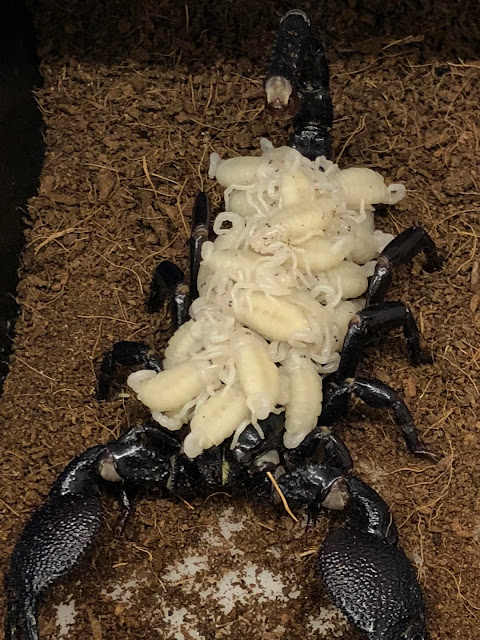
The Silent Sacrifice: A Heartbreaking Lesson from Nature
In the depths of the wild, there are stories of survival and sacrifice that are not only incredible but deeply moving. One such story is that of the mother scorpion, an embodiment of selflessness, resilience, and unconditional love. As she carries her tiny babies on her back, she becomes a symbol of sacrifice, enduring hardship after hardship to protect her young in a perilous world.
A Mother Like No Other in the Animal Kingdom
Scorpions have a reputation as solitary, fearsome creatures, but motherhood transforms them in ways that surprise even seasoned naturalists. Unlike most invertebrates that lay eggs and disappear, the female scorpion gives live birth. Her babies, called scorplings, are born soft, pale, and completely helpless. In those first days of life they cannot survive alone, and so they climb onto their mother's back, where they will ride until they are strong enough to fend for themselves.
Life in the wilderness is unforgiving, with dangers lurking at every corner. Yet, despite the constant threats, the mother scorpion shows unmatched strength. She shields her babies from predators, guards them against environmental hazards, and faces every challenge head on, all while enduring the physical toll of carrying them on her back. Her unwavering commitment to her offspring highlights the remarkable lengths a parent will go to ensure the survival of their children.
The Biology Behind the Bond
The maternal behavior of scorpions is rooted in biology, but it is no less extraordinary for it. Consider what the mother endures:
- She often stops hunting entirely while her young are riding on her back, which means she goes without food for days or even weeks.
- Her babies rely on her warmth and protection because their exoskeletons are still soft and vulnerable to the elements.
- She must remain constantly alert, because a single predator, a rival scorpion, or even a sudden shift in temperature could threaten the entire brood.
- During this period she may lose a significant amount of body weight, trading her own strength for the safety of her young.
Scientists who study arachnid behavior note that this extended maternal care is relatively rare among invertebrates. Most insects and arachnids provide no parental care at all. The scorpion, with her weeks of devoted carrying, feeding by proxy, and protection, stands apart.
The Emotional Weight of a Silent Sacrifice
It is not just her physical endurance that stands out; it is the emotional strength in her silent sacrifice. With every step she takes, the mother scorpion is quietly defying the odds, her every action driven by an instinctual need to protect and nurture. Her journey serves as a reminder that in the wild, as in life, the most profound love often requires the greatest sacrifice.
There is something about a sacrifice made without words that touches the human heart. The mother scorpion does not cry out, does not ask for recognition, and does not expect gratitude. She simply carries on, one step at a time, because her babies need her to. This wordless devotion mirrors the quiet sacrifices human parents make every day: the sleep lost, the meals skipped, the dreams postponed so that children can thrive.
Lessons Humans Can Take from Nature
The mother scorpion's journey is not just a lesson in survival. It is a testament to the boundless love and protection that exists in nature. It is a heartbreaking yet beautiful reminder that the act of giving everything for the ones we love is universal, transcending the boundaries of species and inspiring awe in the hearts of those who witness it.
What can we learn from this tiny creature's devotion? Several truths stand out:
- True love asks for nothing in return. The scorpion mother gains nothing from her sacrifice except the survival of her young. Love that gives freely is the strongest kind.
- Strength is often quiet. The most powerful acts of devotion rarely come with noise or celebration. They happen in the background, unnoticed, day after day.
- Sacrifice has a cost, and that is what makes it meaningful. The mother's hunger, exhaustion, and vulnerability are not accidents of nature. They are the price of devotion.
- Protection comes before comfort. The mother scorpion puts her own needs last. Human parents do the same, again and again, without a second thought.
Other Examples of Parental Devotion in Nature
The scorpion is not alone in her sacrifice. Nature is full of parents who give everything for their young. Emperor penguins endure Antarctic blizzards without food for months. The octopus mother stops eating entirely while guarding her eggs, slowly fading as her young hatch. Certain species of spiders even allow their young to feed on their bodies. Each of these stories carries the same quiet message: love, at its deepest, is measured by what we are willing to give up.
In a world where the struggle for survival is constant and harsh, the silent sacrifice of the mother scorpion stands as one of the most powerful and touching examples of parental devotion in nature. It teaches us that love, in its purest form, is often quiet, selfless, and unspoken, but it is always there, guiding us through the hardest of times.
Why These Stories Move Us So Deeply
Why do stories of animal mothers move human readers so powerfully? Psychologists suggest that empathy is triggered when we recognize our own emotions in another being. When we see a scorpion mother enduring hunger to keep her babies safe, we see echoes of our own parents, or of ourselves. The story becomes a mirror, reflecting the love we have given and received.
These stories also remind us that devotion is not a human invention. Long before the first human walked the earth, mothers in the wild were already sacrificing everything for their young. That continuity is humbling. It connects us to something older and deeper than culture, something written into the very fabric of life.
A Final Reflection
The next time you feel unseen in your sacrifices, remember the mother scorpion. She carries her babies through the darkness without applause, without recognition, and without regret. Her silent devotion asks nothing of the world except the chance to protect what she loves. Perhaps that is the heartbreaking lesson nature has been trying to teach us all along: the deepest love is the kind that gives everything and says nothing.
Frequently Asked Questions
Do scorpion babies really ride on their mother's back?
Yes. Newborn scorpions, called scorplings, climb onto their mother's back shortly after birth. They stay there for roughly one to two weeks, until their first molt hardens their exoskeletons and they can survive on their own.
Does the mother scorpion eat while caring for her young?
Usually not. Most mother scorpions stop hunting while their babies are riding on her back. She relies on stored energy, which is why she often loses significant body weight during this period.
Are scorpions the only invertebrates that care for their young?
No, but extended maternal care is rare among invertebrates. Most insects and spiders provide little or no care after birth, which makes the scorpion's devotion especially remarkable.
How long do baby scorpions stay with their mother?
They typically remain on her back until their first molt, which happens within one to two weeks of birth. After that, they disperse to live independently.
Is it true that baby scorpions eat their mother?
In some species, under extreme stress, there are rare reports of offspring feeding on a weakened mother. However, this is not the normal pattern. The typical story is one of maternal care and self sacrifice, not the other way around.

