Have you ever woken up with itchy, dry, or irritated eyes and wondered what caused it?
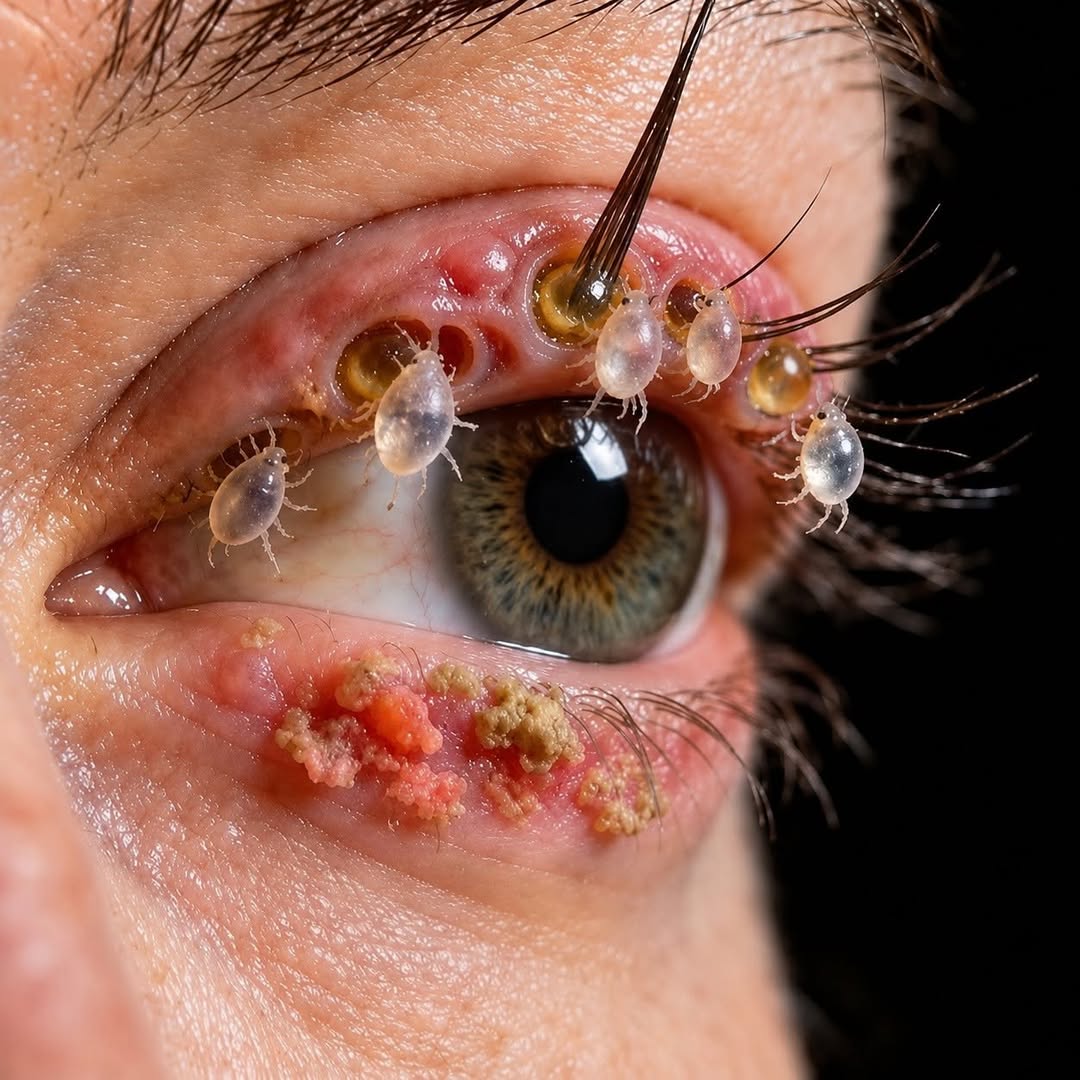
Images circulating online sometimes claim that tiny organisms live on our eyelashes and become active while we sleep. These posts can make ordinary eye symptoms seem much more frightening than they really are.
The truth is more straightforward. Microscopic organisms called Demodex mites can naturally live around hair follicles, including the eyelashes. However, their presence does not automatically mean that something is wrong with your eyes.
In most people, these mites cause no noticeable problems. Eye irritation after sleeping can have many other common causes, including dry eyes, allergies, eyelid inflammation, or everyday buildup around the eyelashes.
Here is what you should know.
What Are Demodex Mites?
Demodex mites are microscopic organisms that can live on human skin. They are commonly found around hair follicles and areas where natural skin oils accumulate.
Because they are extremely small, they cannot normally be seen without magnification.
Finding out that these organisms can live around the eyelashes may sound concerning, but their presence alone is generally not a reason to panic. Many healthy adults have Demodex mites without experiencing any symptoms.
Problems may occur when their numbers become excessive or when the surrounding skin and eyelids become inflamed.
Can Demodex Mites Affect the Eyelashes?
Yes, Demodex mites can be found around eyelash follicles.
When they are associated with eyelid irritation, some people may experience symptoms such as:
- Itching around the eyelashes
- Red or irritated eyelids
- A burning or uncomfortable sensation
- Dryness or gritty-feeling eyes
- Crusting around the eyelashes
- General eyelid discomfort
However, these symptoms are not specific to Demodex mites. Similar problems can occur because of allergies, dry eyes, blepharitis, cosmetics, contact lenses, or other eye conditions.
For that reason, it is not possible to determine the cause of eye irritation simply by looking at symptoms.
Why Do Your Eyes Sometimes Feel Worse After Sleeping?
Eye discomfort in the morning is relatively common, and there are several possible explanations.
Dry Eyes
Tear production and blinking change while you sleep. As a result, some people may wake up with eyes that feel dry, gritty, or slightly irritated.
Dry indoor air, fans, air conditioning, and prolonged screen use during the day can also contribute to dry-eye symptoms.
Eyelid Buildup
Natural oils, dead skin cells, and other debris can collect around the eyelids and eyelashes.
If this buildup is significant, it may contribute to irritation, particularly when the eyelids are already sensitive.
Allergies
Allergens in the bedroom can sometimes contribute to morning eye irritation.
Dust, pollen, pet dander, and other particles may become trapped in bedding or circulate through the room. People with allergies may notice itching, redness, watering, or puffiness around the eyes.
Blepharitis
Blepharitis is inflammation affecting the edges of the eyelids.
It can cause symptoms such as redness, irritation, burning, itching, and crusting around the eyelashes. There are several possible causes and contributing factors, so persistent symptoms should be evaluated by an eye-care professional.
Does Sleeping Cause Mites to Appear?
One common misunderstanding comes from dramatic images showing large numbers of organisms around eyelashes.
While Demodex mites can live around hair follicles, viral images may not accurately represent what a person’s eyelashes normally look like. Some images shared online are magnified, digitally altered, or created for educational illustration.
This is important because an exaggerated image can make a normal biological process appear much more alarming than it actually is.
The presence of microscopic organisms on the skin is not necessarily a sign of poor hygiene or illness.
Simple Ways to Care for Your Eyelids
Good eyelid hygiene can help reduce the accumulation of oils and debris around the eyelashes.
Consider these simple habits:
Remove Makeup Before Bed
Leaving eye makeup on overnight can contribute to irritation and buildup around the eyelids.
Gently remove makeup before going to sleep, especially products applied close to the eyelashes.
Keep Your Face Clean
Washing your face regularly can help remove excess oil, dirt, and environmental particles.
When cleaning around the eyes, avoid harsh products and be careful not to get irritating substances directly into the eyes.
Change Pillowcases Regularly
Pillowcases come into contact with your face for several hours every night.
Regularly washing and changing them can help keep your sleeping environment clean and may be particularly helpful for people who are sensitive to dust or other allergens.
Avoid Rubbing Your Eyes
Rubbing irritated eyes can make discomfort worse and may further irritate the delicate skin around the eyes.
If your eyes feel itchy or uncomfortable, try to identify the underlying cause instead of repeatedly rubbing them.
Take Care With Contact Lenses
If you wear contact lenses, follow the cleaning, replacement, and wearing instructions provided by your eye-care professional or the lens manufacturer.
Avoid wearing lenses longer than recommended, and never use them in ways that go against their instructions.
When Should You Have Your Eyes Checked?
Occasional mild irritation does not necessarily indicate a serious problem. However, persistent or worsening symptoms deserve professional attention.
Consider speaking with an eye-care professional if you experience:
- Ongoing redness
- Noticeable eyelid swelling
- Eye pain
- Changes in vision or blurred vision
- Unusual or excessive discharge
- Persistent itching
- Repeated eyelid irritation
- Symptoms that do not improve with basic care
An eye-care professional can examine the eyelids and eyes and determine whether the symptoms are related to dryness, allergies, inflammation, Demodex mites, or another condition.
The Bigger Picture
It can be easy to become worried after seeing dramatic health-related images online. But a striking photograph or viral post does not necessarily tell the complete story.
Demodex mites are real microscopic organisms that can live around hair follicles, including the eyelashes. Their presence is common and does not automatically mean that a person has an eye problem.
More importantly, morning eye irritation has many possible causes. Dryness, allergies, eyelid hygiene, inflammation, and environmental factors may all contribute.
Instead of relying on alarming social media claims, pay attention to persistent symptoms and seek professional advice when necessary.
Final Thoughts
Your eyelashes and eyelids are part of a complex biological environment, and microscopic organisms can naturally be present on the skin. In most cases, their presence is not something that should cause alarm.
If you occasionally wake up with slightly dry or irritated eyes, simple habits such as removing makeup, keeping your face clean, washing bedding regularly, and avoiding eye rubbing may help.
If irritation continues, becomes uncomfortable, or is accompanied by pain, swelling, discharge, or vision changes, an eye-care professional can help identify the cause.
The key takeaway is simple: a viral image does not tell you what is happening with your own eyes. Understanding the possible causes and paying attention to persistent symptoms is a much better approach to eye health.