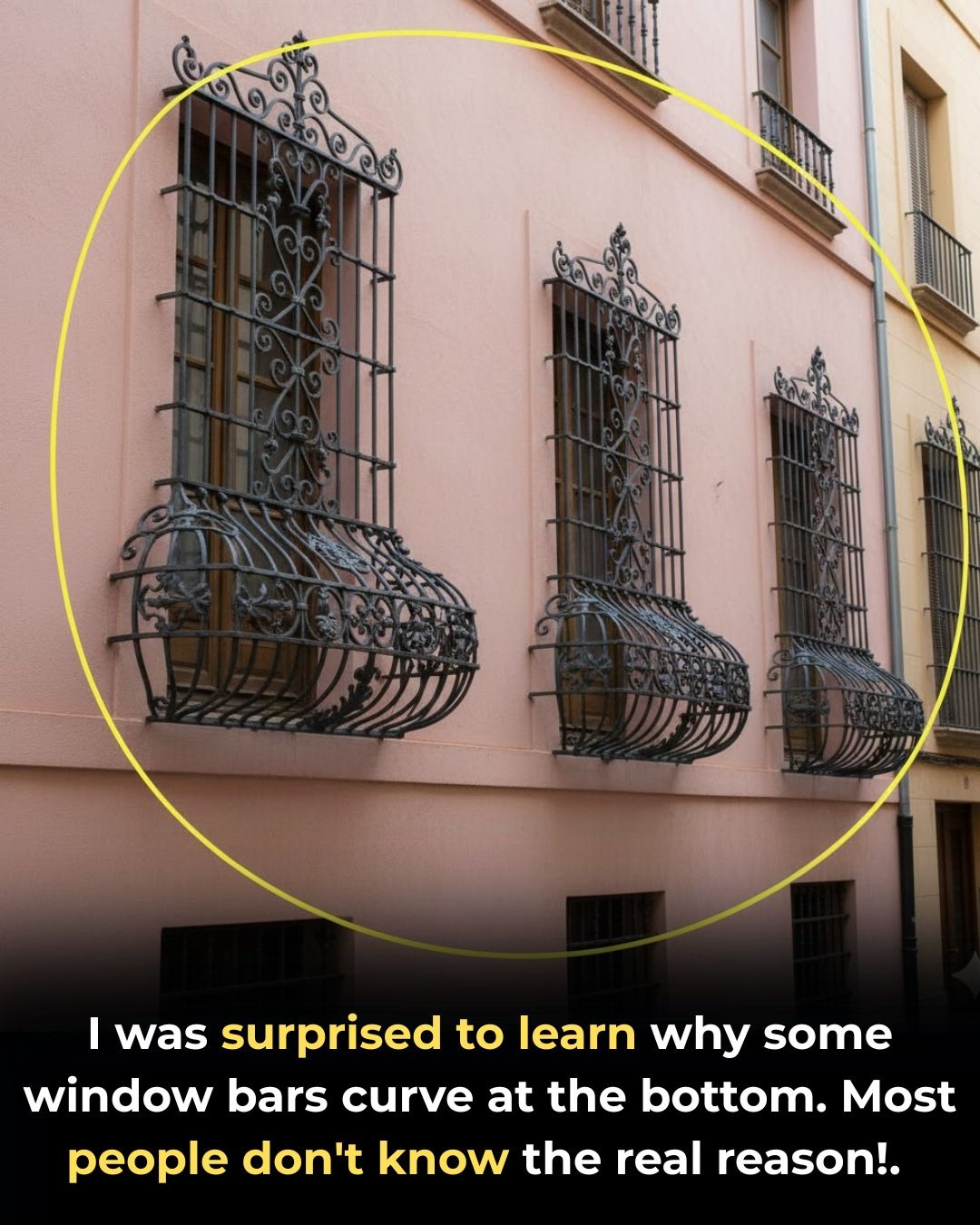
If you’ve ever walked past an older home or historic building, you may have noticed something interesting about the window grilles. Some of them feature a gentle outward curve at the bottom. While these curved bars certainly add visual charm, they were originally designed with a practical purpose in mind.
Let’s take a closer look at why this architectural detail became so common—and what it was meant to accomplish.
A Smart Solution From the Past
Long before modern sealants and weatherproof materials were available, buildings relied on clever design features to protect against the elements. Rainwater was a particular concern, especially for homes with wooden window frames.
When rain ran down the glass, it would naturally collect along the bottom edge of the window. If metal bars were installed straight and tightly against the glass, water could become trapped between the grille and the frame. Over time, this moisture buildup increased the risk of wood rot, mold growth, and structural wear.
The curved design helped solve this problem in two simple but effective ways:
1. Helping Redirect Water
The outward curve acts almost like a small channel. Instead of allowing water to pool against the window frame, the design encourages it to flow outward and drip away from the building. This reduced prolonged moisture contact and helped preserve the structure.
2. Allowing Air Circulation
By curving outward, the bars create a small gap between the metal and the glass. This subtle space improves airflow around the window area, helping surfaces dry more quickly after rain. Better ventilation meant less lingering moisture—and less damage over time.
Decorative and Functional
Over the centuries, curved window bars became associated with certain architectural styles, particularly in historic European towns and older urban neighborhoods. Today, they are often appreciated for their aesthetic appeal as much as their functionality.
While modern construction methods now offer advanced waterproofing solutions, these curved grilles remain a reminder of how thoughtful design once played a crucial role in protecting buildings from everyday weather challenges.
Sometimes, the smallest details in architecture tell the most practical stories.