A developing situation in the Caribbean is attracting growing international attention, as Mexico takes steps that could influence regional diplomacy and economic relations.
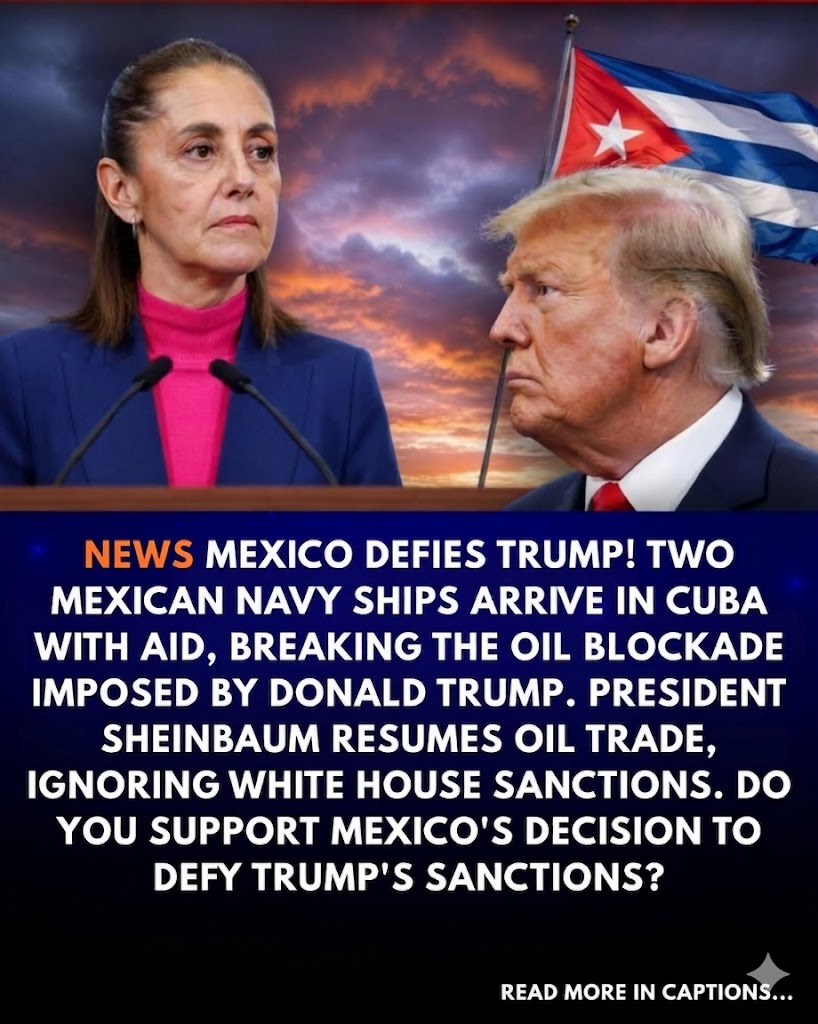
Mexico has recently dispatched naval vessels carrying humanitarian supplies to Cuba, a move that comes at a time when U.S. policies continue to restrict certain types of trade with the island, particularly in the energy sector. The shipment is being framed by Mexican officials as part of an effort to provide support to communities facing shortages of essential resources.
The decision was made under the leadership of Claudia Sheinbaum, who has reiterated Mexico’s commitment to maintaining an independent foreign policy. According to official statements, the aid shipments are intended to address humanitarian concerns, including access to fuel and basic goods, while also reinforcing Mexico’s long-standing diplomatic approach of non-intervention and cooperation.
On the other hand, policies associated with Donald Trump have emphasized economic pressure on Cuba, including measures affecting oil and energy flows. These actions are part of a broader framework aimed at encouraging political and economic changes. U.S. officials have historically viewed such restrictions as a strategic tool, though they have also been the subject of international debate.
Mexico’s latest move highlights a complex balance between humanitarian priorities and geopolitical considerations. Analysts suggest that while the shipments may not immediately lead to a major escalation, they do represent a significant moment in regional relations. Actions like these can influence how countries navigate sovereignty, cooperation, and compliance with international expectations.
In addition, the situation reflects broader global trends, where nations are increasingly asserting their autonomy in foreign policy decisions, even when those decisions intersect with the interests of larger powers. Mexico’s approach may resonate with other countries that prioritize humanitarian engagement while maintaining independent diplomatic positions.
Experts also point out that the long-term impact will depend on how all parties respond. Diplomatic channels, economic measures, or public statements could shape the next phase of this situation. Historically, similar developments have sometimes led to negotiations and adjustments rather than immediate escalation.
For now, the international community continues to observe closely, with attention focused on potential responses, the stability of regional trade relationships, and the ongoing needs of people affected by resource shortages.
As global dynamics evolve, situations like this underscore the importance of dialogue, cooperation, and carefully balanced policy decisions in addressing both humanitarian concerns and international relations.
What do you think is the best way for countries to handle situations where humanitarian needs and political policies overlap?