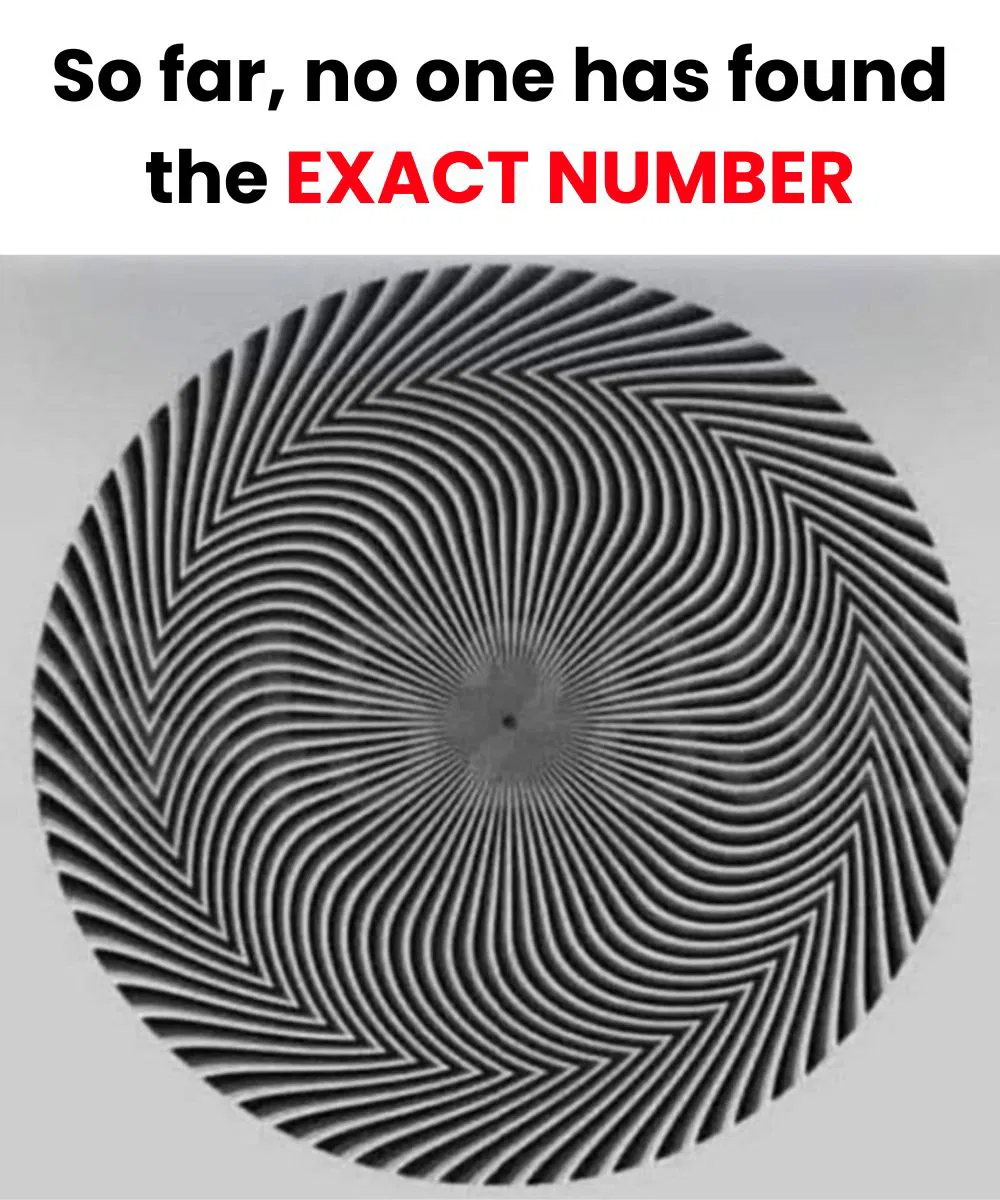
Can You Spot the Hidden Number in This Optical Illusion? Not Everyone Sees It the Same Way
A simple picture has taken the internet by storm, leaving thousands of people scratching their heads. At first glance, it looks like nothing more than a black-and-gray spiral. But look closer. Hidden inside this dizzying pattern is a secret number, and surprisingly, not everyone sees the same thing.
Some people report seeing only three digits. Others spot five, seven, or even more. Each answer can feel completely certain to the person seeing it, which is why this illusion sparks such lively debates. So what is really happening here? Let us dive into the science behind this viral illusion and why it keeps dividing viewers.
Why This Spiral Tricks Your Eyes
Optical illusions like this work because of something called contrast sensitivity: the ability of your visual system to distinguish subtle differences between shades of light and dark. The hidden number is drawn in grays that sit very close to the grays of the spiral background. Your eyes and brain team up to process those shades, but the boundary between "number" and "background" is deliberately faint.
Think of it like a whisper in a noisy room. If your hearing is sharp and the room quiets for a moment, you catch every word. If not, you catch fragments. Contrast sensitivity works the same way for vision: some visual systems pick up fainter differences than others, and the same visual system performs differently under different conditions.
The spiral shape adds another layer of difficulty. Spirals create a sense of motion and draw your eyes along their curves, which competes with the focused attention you need to trace faint digits. The pattern is, in a sense, actively distracting you from its own secret.
Why People See Different Numbers
If you and your friends do not agree on what you see, nobody is wrong. Several real factors explain the disagreement:
Your eyes. People naturally differ in contrast sensitivity. Age plays a role too: contrast sensitivity typically peaks in young adulthood and declines gradually afterward. Lighting conditions matter as well; your eyes distinguish subtle grays better in some light than in others.
Your screen. A high-quality display with good contrast can reveal faint details that a dim or low-quality screen smears away. Screen brightness settings, night-mode filters, and blue-light settings all shift how grays render. Two people looking at the "same" image on different phones may literally be seeing different images.
Your viewing distance and angle. Step back from the screen and the spiral's fine pattern blurs slightly, which can make the larger shapes of the hidden digits stand out. Tilt your head or view from an angle and the effective contrast changes. Tiny shifts in perspective can make a new digit appear or disappear.
Your expectations. Once someone tells you the number has seven digits, your brain starts hunting for seven digits, and it is remarkably good at finding what it expects. This is why the "big reveal" in comment sections can change what you see: suggestion shapes perception.
Just for Fun: Not a Vision Test
Before anyone starts worrying about their eyesight, an important clarification: this illusion is not a medical eye test. It does not diagnose vision problems, measure visual acuity, or detect eye disease. It is a fun demonstration of how the brain and eyes process images together.
That said, it is a good reminder that perception is not as reliable as it feels. We walk around trusting our eyes completely, but this spiral shows how easily context, lighting, and equipment change what we see. Healthy skepticism about first impressions is a useful habit.
If you do have genuine concerns about your vision, such as trouble reading, frequent headaches, or noticeable changes in sight, see an eye care professional. An internet illusion is entertainment; a real exam is healthcare.
Tips to Spot the Hidden Number
Want to give it another try? These simple tricks improve your odds of seeing the full number:
- Step back. Being too close lets the spiral's fine detail dominate. A few feet of distance lets the larger digit shapes emerge.
- Adjust brightness and contrast. Turn your screen brightness up and, if your device allows it, nudge the contrast higher. Faint grays separate more clearly.
- Tilt your head or the screen. A fresh angle changes how light hits the display and can reveal digits that were invisible head-on.
- Squint. Reducing the sharpness of the spiral pattern helps the bigger, fainter shapes of the numbers come forward.
- Look at it on a bigger screen. If you first saw it on a phone, try a tablet or monitor. More pixels and more physical size both help.
- Glance, do not stare. Sometimes the digits pop out in the first second and then vanish as your eyes adapt. Trust the glance.
If you try these and a new digit appears, you have just experienced your visual system recalibrating in real time. That is the illusion working as designed.
Why These Illusions Go Viral
This spiral is not the first illusion to break the internet, and it will not be the last. They spread for reliable reasons:
- Low barrier to entry. Anyone can look and have an opinion in five seconds.
- Genuine disagreement. Because people literally see different things, the comments become a debate, and debates drive engagement.
- Shareability. "What number do you see?" is a perfect prompt. It demands a response.
- The reveal. Learning the full answer delivers a small rush, and people share things that gave them that rush.
From the dress that divided the world over blue and black versus white and gold, to hidden-number spirals, the formula is the same: one image, multiple honest perceptions, endless argument.
The Bigger Lesson: Seeing Is Believing (Until It Isn't)
There is something quietly profound about an image that honest, healthy-eyed people perceive differently. It demonstrates that what we call "seeing" is really a construction: raw light data filtered through eyes, screens, brains, expectations, and context.
That is worth remembering outside of internet games. Eyewitnesses disagree. First impressions mislead. Two reasonable people can look at the same situation and see different things, and both can be sincere. A spiral with a hidden number is a small, harmless lesson in humility for the eyes.
Frequently Asked Questions
What is the hidden number?
The digits are embedded at very low contrast in the spiral, and the exact count people report varies. Rather than spoiling a single answer, which differs across versions of the image circulating online, try the viewing tips above and see what emerges for you.
Does seeing fewer digits mean bad eyesight?
No. Screen quality, brightness, viewing angle, and lighting explain most of the variation. This is not a diagnostic tool.
Why do I see it clearly one moment and lose it the next?
Your visual system adapts to patterns quickly. The first glance often reveals the most, before adaptation smooths the faint differences away. Blinking and looking away briefly can reset it.
Are there other illusions like this?
Many. Hidden-number and hidden-text images using low contrast or stereogram-style patterns are a whole genre. Each one plays the same trick: hiding a signal just below the threshold of easy perception.
So, what number do you see? Whatever your answer, you have just taken a quick tour through the science of vision. Not bad for staring at a spiral.