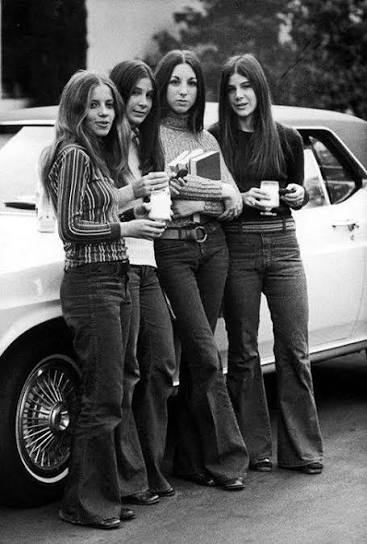
Photographs from the 1970s have a unique way of making the past feel surprisingly close. One simple picture can reveal much more than the people posing for the camera. Their clothes, hairstyles, surroundings, cars, and everyday activities all provide clues about what life looked like during the decade.
At first glance, a vintage photograph may seem ordinary. People might simply be standing together, talking, smiling, or enjoying an afternoon. But decades later, those ordinary moments can become fascinating records of another time.
The 1970s had a visual identity that remains easy to recognize. Fashion, hairstyles, music, cars, homes, photography, and social habits all reflected a period of significant cultural change.
So when you look at a photograph of girls from the 1970s, what detail catches your attention first?
Fashion That Defined the 1970s
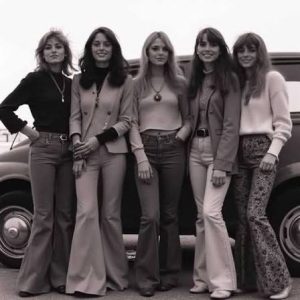
Clothing is often one of the easiest ways to identify the decade in an old photograph.
Fashion during the 1970s was influenced by many different trends. Everyday outfits could include trousers, polo shirts, button-down shirts, simple jackets, coats, skirts, and colorful combinations.
Young people often used clothing as a way to express their personalities. Some preferred simple and practical outfits, while others experimented with brighter colors, different fabrics, patterns, and silhouettes.
The decade was also a period when traditional ideas about clothing were changing. People became more willing to mix styles and experiment with their appearance.
Because of that, an old photograph can sometimes be dated surprisingly accurately just by looking at the clothing.
Even without a date written on the back, fashion can provide an important clue.
Hairstyles Were a Major Part of the Look
Hair was just as influential as clothing when it came to creating the recognizable appearance of the 1970s.
Longer and fuller hairstyles became popular among many young people. Some styles focused on volume, while others featured long hair that naturally framed the face.
Men’s hairstyles also changed during the decade. Longer hair became increasingly common, although shorter traditional cuts remained popular as well.
When hairstyles are combined with clothing and the photographic quality of the period, the result creates a visual style that is strongly associated with the 1970s.
These details are part of what makes vintage photographs so interesting to examine.
A Time Before Smartphones
One of the biggest differences between photographs from the 1970s and modern pictures is something that isn’t visible at all.
There are no smartphones.
No tablets.
No wireless earbuds.
No glowing screens in everyone’s hands.
Nobody is checking notifications while talking to a friend.
Nobody is taking dozens of selfies and immediately reviewing them.
For younger generations, this can be difficult to imagine. But people naturally adapted their daily routines to a world without constant digital communication.
When friends spent time together, conversation was usually face-to-face.
Families gathered around tables.
Children played outside.
People went to social events without documenting every moment for an online audience.
The absence of digital technology shaped everyday life in ways that may not have been obvious at the time.
Entertainment Was More Hands-On
Television was an important part of entertainment during the 1970s, but viewers had far fewer choices than people have today.
There were no streaming services offering thousands of programs on demand. People couldn’t simply search for almost any movie or television show and start watching immediately.
Music and entertainment often required more planning.
People listened to records, cassette tapes, and radio broadcasts. They played cards and board games, went to movie theaters, attended concerts, and participated in local events.
Children often spent free time riding bicycles, playing sports, exploring their neighborhoods, or meeting friends outdoors.
These activities still exist today, but they competed with far fewer digital distractions.
Music Was a Physical Experience
Music offers another interesting way to understand everyday life in the 1970s.
Today, millions of songs can be accessed almost instantly. During the 1970s, listening to music often meant owning a record, cassette, or other physical recording—or waiting for a favorite song to play on the radio.
Records were more than audio recordings. They were physical objects with artwork, covers, and printed information.
Visiting a record store, choosing an album, bringing it home, and putting it on a turntable was part of the experience.
Music could become connected to a specific object or memory.
Years later, seeing an album cover could instantly remind someone of a particular period in their life.
Photography Required More Patience
The photograph itself also tells us something about the era.
Most everyday photography in the 1970s relied on film. Pictures couldn’t be reviewed immediately on a screen.
If someone took a photograph, they generally had to wait until the film was developed before seeing the result.
Film also had a limited number of exposures, and taking pictures involved a cost. As a result, people often took fewer photographs than we do today.
A birthday party might produce only a few pictures.
A family vacation might be represented by a small collection of carefully chosen photographs.
A gathering with friends could result in one picture that eventually became a treasured memory.
That limitation sometimes gave individual photographs greater importance.
Ordinary Photographs Became Family History
Today, a person can take hundreds of pictures during a single event. Many of them may never be viewed again.
Digital photography has made taking and storing images incredibly easy.
In earlier decades, photographs were often printed and placed inside albums. Those albums could remain in family homes for many years.
Someone might open one decades later and see relatives as they looked when they were young.
A simple photograph could therefore become much more than a picture. It could become part of a family’s history.
Communication Was Much Less Immediate
Communication in the 1970s also worked differently.
There were no messaging apps, group chats, social-media feeds, or video calls.
If someone wanted to speak with a person who lived far away, they might use a landline telephone or write a letter.
Letters could take several days to arrive. Phone calls could also be less convenient depending on distance and cost.
As a result, people generally didn’t expect instant responses.
Someone who hadn’t replied for several hours wasn’t necessarily considered unavailable. There simply wasn’t an expectation that everyone should be reachable every moment of the day.
A Different Pace of Daily Life
People in the 1970s were certainly busy. They worked, studied, raised families, managed homes, traveled, and handled many of the same responsibilities people have today.
But technology had not yet become integrated into nearly every part of daily life.
There were fewer notifications.
Fewer digital platforms.
Fewer screens competing for attention.
Many activities happened one at a time.
Watching television meant watching television.
Eating dinner meant eating dinner.
Talking to a friend meant giving that person your attention.
From a modern perspective, that separation can seem surprisingly calm.
Childhood Looked Different
Many vintage photographs show children spending time outdoors.
They might be riding bicycles, playing sports, visiting friends, climbing trees, or simply staying outside until it was time to go home.
Parents had fewer ways to communicate with their children during the day. There was no location sharing or instant messaging.
That provided a certain level of independence, although it also meant families had fewer ways to contact one another quickly.
Modern childhood has its own advantages, including easier communication and access to information.
Neither period was perfect. The circumstances were simply different.
Neighborhoods Were Important Social Spaces
Neighborhoods often played an important role in social life.
People could know the families living nearby. Children frequently played with others from the same area, while adults might visit neighbors or talk outside their homes.
Community connections were maintained largely through face-to-face interaction.
Today, someone can have hundreds of online contacts while knowing very little about the people living nearby.
Old photographs can therefore serve as reminders that meaningful social connections don’t always require technology.
Sometimes proximity and time are enough.
The Beauty of Ordinary Moments
Perhaps the most interesting thing about vintage photographs is that they don’t need to show a major event to become valuable.
A person standing beside a car.
Friends sitting together.
A family gathered around a table.
Children playing outside.
Someone posing in front of a house.
At the time, these moments probably felt completely normal.
Nobody knew that decades later, people would study their clothing, hairstyles, cars, furniture, and surroundings.
They were simply living their lives.
That is part of what makes these photographs so compelling.
Cars Were Part of Everyday Life
Cars are another useful clue when examining photographs from the 1970s.
Vehicles were more than transportation for many people. They could represent independence, practicality, personality, and style.
The body shapes, interiors, chrome details, and designs of vehicles from the period were often very distinctive.
A single car in the background can sometimes help identify the approximate era of a photograph.
Looking at those vehicles today can make the past feel even more distant.
Homes Had Their Own Style
The interiors of homes also changed over time.
Furniture, carpets, wallpaper, televisions, lamps, kitchen appliances, and stereo systems all reflected the preferences and technology of the period.
A living room from the 1970s could look very different from a modern living room.
Instead of multiple connected screens, a home might have centered around one television, a stereo system, bookshelves, and furniture arranged for conversation.
The physical environment influenced how people spent their time.
There Was No Social-Media Audience
Perhaps one of the biggest differences was the lack of a large online audience.
When people took photographs in the 1970s, they generally weren’t thinking about likes, comments, follower counts, or algorithms.
A photograph was usually intended for family members, friends, or personal memories.
People still cared about looking good, of course. Appearance has always mattered to people.
But the potential audience was dramatically smaller.
Privacy Had a Different Meaning
Before social media, everyday life was naturally less visible to strangers.
An embarrassing moment might be remembered by a few people in a local community.
Today, the same moment could potentially be photographed, uploaded, shared, copied, and preserved for years.
Vintage photographs offer an interesting reminder of how much the meaning of personal visibility has changed.
People could live their lives without having thousands of strangers following their daily activities.
The 1970s Were Not Perfect
It is easy to romanticize old photographs.
The vintage colors, clothing, cars, and simpler technology can create a warm sense of nostalgia.
But looking backward requires some balance.
The 1970s also included economic difficulties, political conflicts, social inequality, technological limitations, and many challenges that affected people’s lives.
The past wasn’t automatically better simply because it was less digital.
Every generation has its own advantages and difficulties.
The real value of historical photographs is that they help us understand how people lived—not that they prove one period was superior to another.
Technology Changed More Than Our Devices
Technological progress isn’t only about smaller computers or smarter phones.
It has also changed behavior.
Technology influences how people communicate, shop, work, entertain themselves, preserve memories, follow news, and maintain relationships.
When comparing a photograph from the 1970s with one taken today, the biggest difference may not actually be the clothing.
It may be where people’s attention is directed.
From a Few Photographs to Thousands
Think about how many pictures can be taken during a modern vacation.
A person can easily take hundreds of photographs without worrying about running out of film.
They can immediately review them, delete unwanted images, and store the rest digitally.
In the 1970s, photography required more effort.
That limitation may have made certain photographs feel more significant.
When every moment can be captured, individual images may feel less rare.
When pictures are limited, each photograph can carry more emotional weight.
Why Vintage Photographs Feel So Emotional
There is something fascinating about seeing people from another generation simply going about their lives.
We recognize their smiles, friendships, families, celebrations, and everyday routines.
They don’t seem completely different from us.
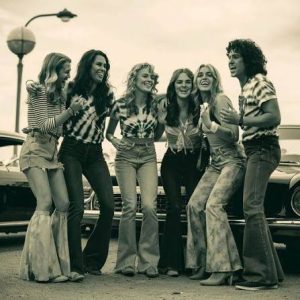
Yet the world around them has changed dramatically.
That combination creates a powerful sense of nostalgia.
We can recognize familiar human experiences while also noticing how much technology, fashion, and culture have changed.
Today’s Photos Will Eventually Become History
The people taking photographs in the 1970s probably weren’t thinking about creating historical records.
They were simply saving memories.
The same thing is happening today.
Photographs stored on our phones could eventually become valuable records of everyday life.
Future generations may look at today’s clothing, cars, homes, restaurants, phones, and social habits with the same curiosity that we have when looking at the 1970s.
They might wonder why certain devices were so common or why people spent so much time looking at screens.
Our ordinary routines may eventually seem just as unusual to them.
The Details We Often Miss
Vintage photographs remind us that history isn’t found only in famous events.
It can also be found in small details.
The shoes someone wore.
A teenager’s hairstyle.
The car parked outside.
The furniture inside a home.
The television in the corner.
The objects people carried.
The way friends stood together.
Even the things that are missing can tell us something.
Every detail provides another clue about everyday life.
What Can We Learn From the 1970s?
Looking at the past doesn’t mean rejecting modern technology.
Smartphones make it possible to communicate with family members around the world almost instantly.
Digital photography allows us to preserve thousands of memories.
GPS makes navigation easier.
The internet provides access to enormous amounts of information.
These are remarkable developments.
At the same time, vintage photographs can remind us of the value of being present.
Sometimes it can be useful to put the phone away during dinner, spend time talking without checking notifications, visit friends in person, or simply enjoy a few minutes without digital distractions.
These aren’t necessarily old-fashioned habits.
They’re simply ways of making room for real-world experiences.
The World Keeps Changing
The 1970s were once the present.
People living during that decade weren’t thinking of themselves as part of a vintage era. They were going to work, meeting friends, raising families, listening to music, watching television, and making plans for the future.
Their ordinary moments have now become windows into history.
One day, our own photographs will serve the same purpose.
Future generations may study our technology, clothing, cars, homes, and habits and wonder how we considered them completely normal.
The Real Charm of a 1970s Photograph
The appeal of these photographs isn’t only the vintage fashion.
It is the feeling of seeing people sharing the same physical space without the technology that dominates modern life.
There are no notifications competing for attention.
No social-media audience waiting for updates.
No endless digital entertainment.
No pressure to document every moment.
Instead, there are simply people talking, laughing, listening to music, playing, and spending time together.
That simplicity can be surprisingly powerful.
Final Thoughts
A photograph from the 1970s is much more than an old image.
It is a small record of a different way of life.
Clothing, hairstyles, cars, homes, music, and photography techniques can immediately reveal the character of the decade. But some of the most interesting clues are the things we don’t see: smartphones, social media, instant messaging, constant notifications, and endless digital entertainment.
Life in the 1970s wasn’t perfect, and there is no need to romanticize every part of the past.
Still, vintage photographs can teach us something valuable.
They show just how quickly everyday life can change.
They also encourage us to pay closer attention to our own routines.
The photographs we take today may seem completely ordinary to us. But decades from now, they could become fascinating historical records.
Future generations may look at our phones, clothes, cars, homes, and habits just as we look at the 1970s today.
So the next time you see a vintage photograph, look beyond the people in the frame.
Notice the small details.
They may tell the most interesting story of all.