Heavily Tattooed Dad Faces Online Criticism But His Family's Story Tells a Different Truth
The saying "don't judge a book by its cover" still holds true today, especially in a world where appearances often lead to quick assumptions. One father's story is a powerful reminder that looks can be misleading, and that true character goes far deeper than skin.
Meet Richard Huff
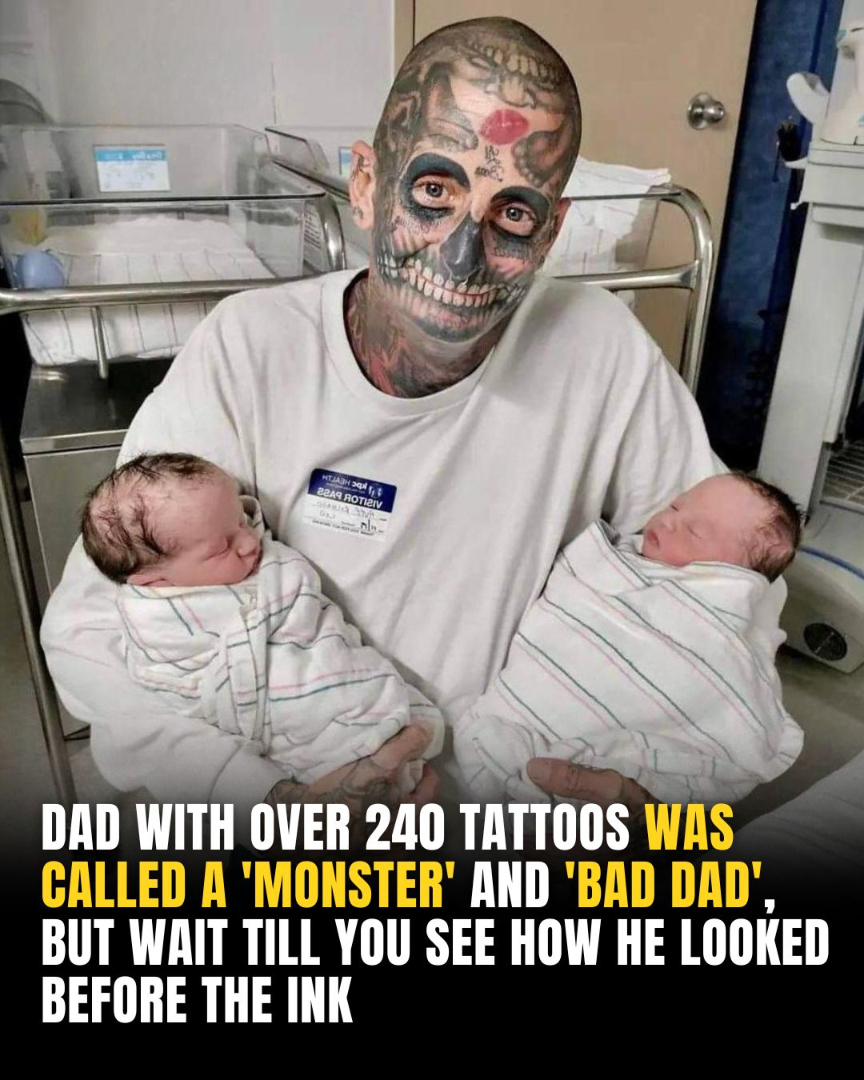
Richard Huff, a 51-year-old father of five, has embraced tattoos as a form of self-expression. With more than 240 tattoos covering around 85% of his body, his appearance often draws attention, both positive and negative. While some people admire his individuality, others have been quick to criticize, even questioning his abilities as a parent.
To put that in perspective: 85% coverage means nearly his entire visible body is tattooed, including his face. In a world where most people deliberate for months over a single small tattoo, Richard's commitment represents one of the most extensive body art collections on a living person.
Despite the online backlash, Richard insists his family is just like any other. He and his wife are raising their children in a loving and supportive home. However, their social media posts, often showing everyday family moments, have sparked mixed reactions from viewers who focus more on his appearance than his actions.
How the Journey Began
Richard shared that his tattoo journey began gradually but quickly became something he was passionate about. What started as a few designs turned into a full-body commitment. This is a common pattern among heavily tattooed people: the first tattoo breaks a psychological barrier, and each subsequent one feels more natural, until the body becomes an ongoing canvas.
Among his tattoos are deeply personal pieces, including his children's names, clear signs of how much his family means to him. This detail is worth pausing on. Critics see the tattoos and question his parenting. But some of those tattoos literally are his parenting, his children's names etched permanently into his skin.
The Challenges of Looking Different
Still, having such a bold appearance hasn't come without challenges. He admits that some children at his kids' school initially found him intimidating. This is an honest acknowledgment. To a small child, a heavily tattooed face can be startling. Richard doesn't pretend otherwise.
But his daughter quickly set the record straight, reassuring others that her dad is kind and loving. There is something powerful about a child defending her parent's character. Children are often the most honest judges of who someone really is. They don't care about social norms around appearance. They care about who shows up, who listens, who makes them feel safe.
Interestingly, even his wife, Marita, had her doubts at first. She openly admitted that she initially judged him based on his looks. But as she got to know him, her perspective changed completely. She now describes him as a caring partner and a devoted father who treats all of their children, biological or not, with love and respect.
That "biological or not" detail matters. Blended families require extra grace, and Richard's commitment to all five children equally speaks to character that has nothing to do with ink.
Present Where It Counts
Marita often shares how supportive and attentive Richard is, highlighting his involvement in family life. From attending school events to participating in parent activities, he makes it clear that being present for his children is a top priority.
This is the quiet rebuttal to every critic: presence. Not appearance, not conformity, but showing up. Day after day. School events. Parent activities. Bedtime. Homework. The unglamorous, repetitive work of raising children well.
Research on parenting consistently shows that what matters most for children's outcomes is warmth, consistency, and involvement. Tattoos appear nowhere in the developmental psychology literature as a risk factor. Absent parents, inconsistent discipline, and emotional neglect do. By every measure that actually counts, Richard is doing the job.
The Online Criticism
Despite this, criticism continues online. Some people question his choices, particularly his facial tattoos. Others, however, defend him, pointing out that personal appearance has nothing to do with parenting ability.
Online judgment follows predictable patterns. Anonymous commenters feel free to say things they would never say to someone's face. Parents, in particular, attract moral scrutiny, with mothers and fathers alike judged against shifting, often contradictory standards. For Richard, the tattoos make him an easy target: visible, unconventional, impossible to ignore.
Richard has addressed the negativity directly, explaining that people who judge others harshly often have their own issues. This is psychologically astute. Research on prejudice shows that harsh judgment of others often reflects the judger's insecurities more than the judged person's failings.
For him, what truly matters is the happiness and well-being of his family. He emphasizes that his tattoos do not define his role as a father. Instead, he believes they offer his children a broader perspective on individuality and acceptance.
That last point deserves emphasis. His children are growing up learning that people who look different can be kind, that individuality is not a threat, and that character is measured by actions. Those are valuable lessons, taught not through lectures but through daily example.
Challenging the Stereotype
At the end of the day, his story challenges a common stereotype: that parents must look a certain way to be considered "good." In reality, love, support, and commitment are what truly define a great parent, not outward appearance. Richard Huff's life is a clear example that judging someone based on looks alone can lead to completely wrong conclusions.
The stereotype persists because it is comfortable. It is easier to assess parenting by appearance than by the harder work of observing how someone actually treats their children. But comfort is not truth.
Every generation expands the definition of what a "normal" parent looks like. Tattoos, once associated with rebellion, are now mainstream: nearly a third of American adults have at least one. Heavily tattooed parents are simply the leading edge of a change that is already underway.
Frequently Asked Questions
Who is Richard Huff?
Richard Huff is a 51-year-old father of five with over 240 tattoos covering approximately 85% of his body. Despite online criticism of his appearance, his family describes him as a loving, devoted, and highly involved parent.
Why do people criticize his parenting?
Critics focus on his extensive tattoos, particularly facial tattoos, and assume his appearance reflects poor judgment or unsuitable parenting. His family and supporters counter that parenting ability has nothing to do with body art.
What do his tattoos include?
Among his many tattoos are deeply personal pieces, including his children's names. His collection represents years of self-expression and commitment to body art as a personal passion.
How does his family respond to the criticism?
His wife Marita, who admits she initially judged him by appearance herself, now describes him as a caring partner and devoted father. His daughter has reassured others at school that her dad is kind and loving. Richard himself addresses negativity directly while focusing on his family's well-being.
Does research link tattoos to parenting ability?
No. Developmental psychology identifies warmth, consistency, involvement, and emotional availability as the key factors in positive parenting outcomes. Body art is not a factor in any established research on parenting quality.
What can we learn from his story?
That character is revealed through actions, not appearance. That children are often the best judges of who someone truly is. And that individuality and devoted parenting are not mutually exclusive, they can, and do, coexist beautifully.