
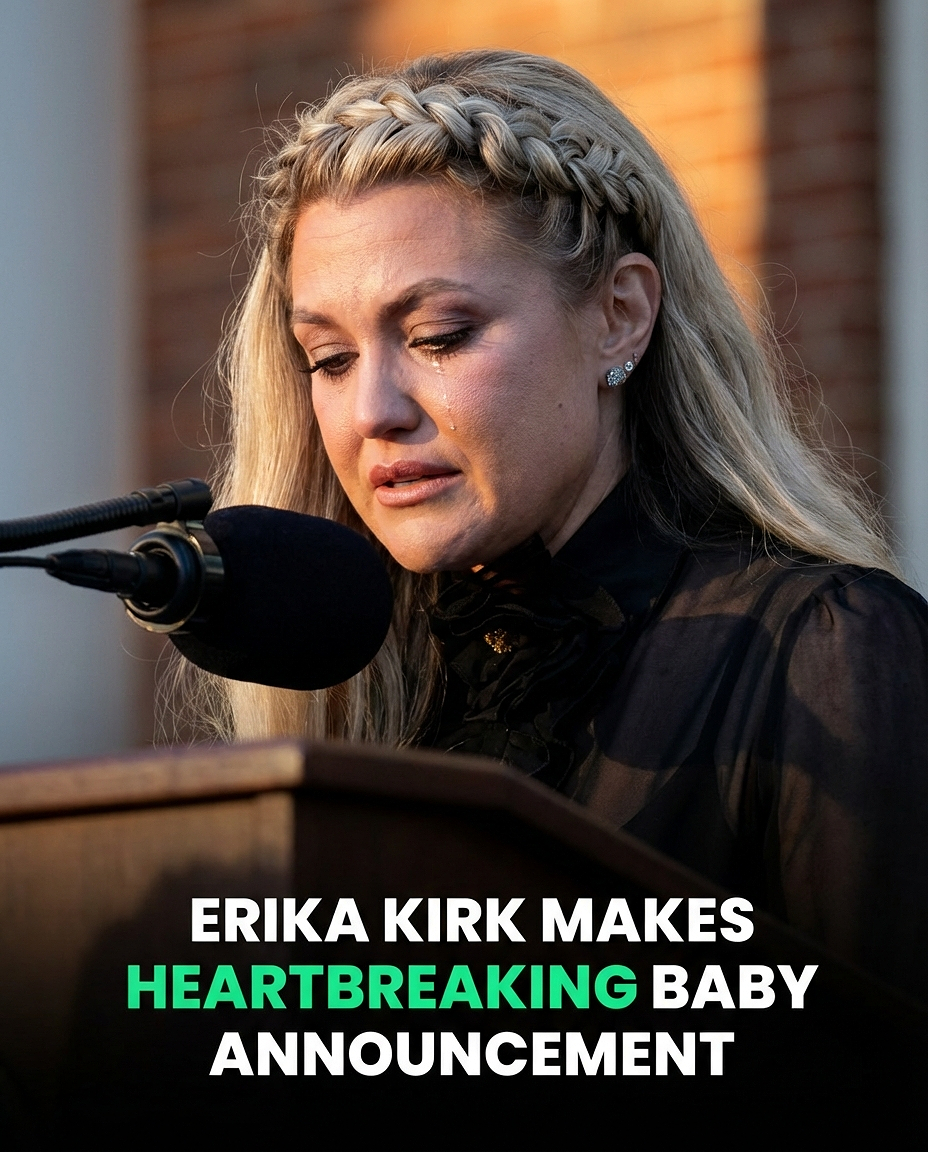
Erika Kirk’s Quiet Moment That Changed the Mood in a Packed Stadium
Large stadiums are usually designed for high energy: cheering crowds, loud music, and moments meant to capture attention instantly. When Erika Kirk stepped onto the stage in Arizona, many expected a powerful, high-volume speech filled with strong reactions.
Instead, the atmosphere shifted in an unexpected way.
The Power of a Pause
Rather than raising her voice or addressing the crowd with dramatic statements, Erika paused. She stood quietly, holding a folded piece of paper she never read from. In a simple, deliberate movement, she placed her husband Charlie Kirk's wedding ring on top of it.
The gesture was subtle, yet it immediately changed the tone of the room. The crowd grew noticeably quieter. The usual chants and applause faded as people focused on the moment unfolding in front of them. Cameras captured Erika's calm but visibly emotional expression, making it clear this was not a performance. It was a deeply personal moment shared in a public setting.
In an era when public figures are expected to project strength through volume and certainty, her choice to lead with stillness was striking. Silence, wielded deliberately, can command a room more completely than any microphone.
Speaking as a Wife and Mother
When she began speaking, Erika avoided political language or slogans. Instead, she spoke from the perspective of a wife and a mother. She reminded the audience that behind any public role is a family and a private life that rarely makes headlines.
She talked about everyday moments: home routines, family conversations, and quiet support, the things that matter far more than public attention. It was a reframing that cut across the usual divisions of a political gathering. Whatever the audience's views, everyone in that stadium understood family, loss, and love.
One of the most surprising moments came when she asked for silence rather than applause. In a venue built for noise, she requested quiet, and the crowd gave it to her. That exchange, a speaker asking for less and receiving more, captured something essential about the evening.
Why the Moment Resonated
The scene struck a chord far beyond the stadium for several reasons:
- Authenticity in a staged age: Public events are heavily produced, and audiences have grown skilled at detecting performance. A moment that reads as genuinely personal breaks through the polish precisely because it can't be scripted.
- Grief made visible: The wedding ring, placed deliberately on the paper, was a symbol everyone understood instantly. No explanation was needed. Objects carry grief more eloquently than speeches sometimes can.
- Restraint as strength: Choosing quiet over volume, reflection over reaction, modeled a different kind of public courage. It suggested that composure under emotional weight is its own form of power.
- Shared humanity: Stripped of slogans, the moment was about universal experiences: loving someone, losing someone, and carrying on. Those themes need no partisan translation.
The Symbolism of the Ring
A wedding ring is among the most potent symbols in human life. It represents promises made, a partnership, a shared history. Placing her husband's ring on the paper, in front of thousands, transformed a private artifact into a public statement without a single word of explanation.
Observers noted the deliberateness of the gesture. This wasn't a prop grabbed for effect. It was handled with care, set down gently, given its own moment. The crowd's response, falling silent without being asked, suggested they understood exactly what they were witnessing.
Moments like this remind us that in communication, what is shown often outweighs what is said. A ring on a paper communicated more about love and loss than any paragraph could.
Public Grief in the Modern Era
Erika Kirk's stadium moment belongs to a broader phenomenon: public figures grieving in front of audiences, and audiences responding with unexpected tenderness. In a media environment that rewards outrage, these pauses stand out precisely because they refuse the expected script.
There are risks to public grief, of course. Private emotions become public property, subject to commentary, criticism, and appropriation. But there are also gifts: the normalization of mourning, the reminder that behind every public figure is a private person, and the quiet permission it gives others to grieve openly in their own lives.
It is also worth noting how rarely audiences are given this kind of honesty. Most public events are engineered to produce a specific emotional response, usually enthusiasm or outrage. A moment that asks for nothing but attention and quiet respect breaks the mold, and audiences tend to remember the exception far longer than the rule.
For the people in that Arizona stadium, the evening likely didn't unfold as expected. They came for a rally and witnessed something rarer: a moment of genuine human vulnerability, handled with grace, in the least likely of settings.
Whatever one's views on the politics surrounding the event, the human core of the moment is hard to dispute. A woman stood quietly before thousands, set down a ring, and asked for silence. And thousands, accustomed to cheering, gave her exactly what she asked for.
Frequently Asked Questions
What happened during Erika Kirk's stadium appearance?
She took the stage in Arizona, paused quietly instead of delivering a high-energy speech, and placed her husband Charlie Kirk's wedding ring on a folded paper she held, creating a somber, reflective moment that quieted the crowd.
Why did the moment get so much attention?
Because it defied expectations. Stadiums are built for noise and spectacle; her choice of stillness, symbolism, and personal reflection created a striking contrast that resonated widely.
What did she talk about in her remarks?
She spoke from the perspective of a wife and mother, focusing on family, everyday moments, and private life rather than political slogans, and at one point asked the crowd for silence rather than applause.
Why do symbolic gestures resonate so strongly?
Symbols like a wedding ring communicate complex emotions instantly and universally, bypassing language and partisanship. A deliberate, quiet gesture often carries more emotional weight than words.
What does public grief accomplish?
It can normalize mourning, humanize public figures, and give audiences permission to acknowledge their own losses. It also carries risks, as private emotions become subject to public commentary.


